Sam Harris has argued that we should treat situations as morally desirable in proportion to their share of experiential well-being. In a debate, William Lane Craig objected:
On the next-to-last page of his book, Dr. Harris makes the telling admission that if people like rapists, liars, and thieves could be just as happy as good people, then his “moral landscape” would no longer be a moral landscape. Rather, it would just be a continuum of well-being whose peaks are occupied by good and bad people, or evil people, alike. […] The peaks of well-being could be occupied by evil people. But that entails that in the actual world, the continuum of well-being and the moral landscape are not identical either. For identity is a necessary relation.
I think the real problem here isn’t that it could be moral to make evil people happy. Harris and I gladly bite that bullet. The deeper worry is that, in a world teeming with pathological sadists, torturing a minority might well increase aggregate psychological welfare. Yet it would be absurd to conclude that torturing an innocent in such a world is moral.
This is a perfectly fair argument. But Harris simply responds, “Not a realistic concern.”
Why the lack of interest? Because, I think, any claim that the English-language word ‘good’ means ‘well-being’, picking it out across all possible worlds, is beside the point for Harris.
A world of sociopaths or sadists would be trapped in a valley of the moral landscape. Fixating on a few tiny hills at the bottom of that valley is missing the big picture, which is that the truly moral act would be to cure the world of its antisocial tendencies, not to indulge them. It’s sort of ‘moral’ for a doctor to spend most of her time making delicious pies for her rapidly deteriorating patients. I mean, baking for others is a good deed, right? But it’s immoral on a deeper level if it distracts the doctor from diagnosing or treating her patients. Craig’s example is alien enough to do some violence to an exact identification of ‘good’ with ‘well-being’, but it does nothing to undermine the enterprise of improving psychological welfare, because it misses the landscape for the hills in much the way the baker-doctor does.
So what is Harris’ goal in The Moral Landscape? He seems to want to establish four main theses:
1. Positive experience is what we value.
All the things we care about are instances of experiential well-being.
2. So we should value all positive experience.
Our strongest unreflective desires will be furthered if we come to value such experience in general, however and wherever it manifests. For this binds all of our values together, encouraging us to work together on satisfying them.
3. Morality is about satisfying that universal value.
Since this is the most inclusive normative project we could all legitimately collaborate on, and since it overlaps a great deal with our most rationally defensible moral intuitions, it makes consummate sense to call this project ‘morality’.
4. So science is essential for getting morality right.
The best way to fulfill this valuing-of-experienced-value is to empirically study the conditions for strongly valenced experience.
I’m very skeptical about 1 on any strong interpretation, but I’ll talk about that another time. (EDIT: See Loving the merely physical.) Though Harris places a lot of emphasis on 1, I don’t think it is needed to affirm 2, 3, or 4. Suppose we learn that some people really do value living outside the Matrix, keeping natural wonders intact, promoting ‘purity‘, obeying Yahweh, or doing the right thing for its own sake, and not solely the possible experiential effects of those things. Still Harris could argue that, say…
… education or philosophical reflection tends to make those goals less appealing.
… those goals make dubious metaphysical assumptions, in a way experiential goals don’t.
… those goals depend for their justification on experiential ones.
… those goals causallydepend on experiential ones.
… those goals are somehow defective variants on, or limiting cases of, experiential ones.
… those goals are unusually rare, unusually temporally unstable, or unusually low-intensity.
… those goals are so different from experiential ones that they can’t all reasonably be lumped into a single category.
Some combination of the above conclusions could establish that experience-centered goals form a natural group that should, for pragmatic or theoretical reasons, be discussed in isolation. Once we’ve got such a group, we can then argue that our most prized goals will be furthered if we generically endorse the entire category (2), and that these goals will be further furthered if we reserve ethical language for this category (3). 4 will then fall out of 2 and 3 easily, as an empirical conclusion about the usefulness of empiricism itself.
On my view, then, the real action is in the case for 2 and 3. What is that case?
Why value value?
It’s important to highlight here that Harris doesn’t think everyone already generically values all positive experience. It would be a fallacy to deduce ‘everyone values every positive experience’ from ‘everything that’s valued by anyone is a positive experience’.
[I]n the moral sphere, it is safe to begin with the premise that it is good to avoid behaving in such a way as to produce the worst possible misery for everyone. I am not claiming that most of us personally care about the experience of all conscious beings; I am saying that a universe in which all conscious beings suffer the worst possible misery is worse than a universe in which they experience well-being. This is all we need to speak about “moral truth” in the context of science.
So Harris is proposing that we change our priorities. They should change in pretty much the same way our ancestors’ linguistic, political, and intellectual practices changed to affirm the scientific character and universal value of health.
Why change? Because it will allow us to better collaborate on the things we already care about most. Again, why should we prize health in general, as opposed to caring specifically about the health of certain groups of people, or certain body parts? Why not have medicine focus disproportionately on our right legs, disregarding our left legs almost completely? Well, I suppose there are no unconditional, metaphysically fundamental reasons to value health in general, or to build sciences and social institutions dedicated to understanding and improving it. But it’s simpler that way, and it benefits us both individually and collectively, so… why not?
Valuing every experienced value, in proportion to its intensity and frequency, is egalitarian in spirit. Practically democratic. That doesn’t make it ‘objective’ in any mysterious cosmic sense. But it does make it an extraordinarily useful Schelling point, a slightly arbitrary but stable and fair-minded convention for resolving disputes.
Of course, if we just think of it as an arbitrary convention, without ascribing it any importance — if we ‘mere‘ it — then the whole point of the convention will be lost. If no one had any respect for democracy, democracy would dissolve overnight. It may be very important for the practice of valuing value that we adopt moral realism or consequentialism as an absolute law, even if the justification for doing so isn’t so much philosophical first principles or linguistic definitions as our lived, pragmatic concern for our own and others’ actual welfare. Good conventions save lives.
It’s because we do in fact have conflicting desires that it’s important to have a general framework for resolving disputes, and Harris’ is a surprisingly flexible yet sturdy one. On Harris’ view, we do factor values like nepotism and egoism into our calculus, and try to help even sociopaths live a joyful, fulfilling, beautiful life — within limits.
What limits? Simply that it come at no cost to everyone’s joy, fulfillment, and beauty. In that respect, the system is more fair than a democracy, since unpopular values get equal weight; and at the same time less exploitable than one, since that weight is determined by psychological fact, not by popular opinion.
So most malign values are quelched or stymied not because they’re intrinsically Evil but because they don’t scale well. They don’t interact in such a way that they form sustainable ecosystems of positively valenced experience. On Harris’ view, we shouldn’t block or assist sadists and war criminals merely because it pre-reflectively ‘feels righteous’ to do so; for our sense of righteousness can go horribly astray. Rather, we should do so because an ecumenical ‘value all values’ project demands it, and because abandoning this meta-value means abandoning our best hope for fully general cooperation between sentients.
What’s on the table is less a moral theory than a humanitarian superproject. Harris reinterprets our language of ‘ought’ and ‘should’ not with the goal of solving Kantian paradoxes but with the goal of defining and motivating a long-term civilizational research program, all while bringing our intellectual drives and traditions into a more intimate conversation with our moral drives and traditions, at the individual as well as the societal scale.
Why call this ‘morality’?
For a person who wrote a book about meta-ethics, Harris is remarkably unconcerned with meta-ethics. He takes note of it only to do a bit of conceptual and rhetorical tidying up. At all times, his sights remain firmly fixed on applied ethics, on politics, on, well, real life.
[T]he fact that millions of people use the term “morality” as a synonym for religious dogmatism, racism, sexism, or other failures of insight and compassion should not oblige us to merely accept their terminology until the end of time.
But if there’s real disagreement here, why speak in terms of ‘ought’ and ‘bad’ at all?
The problem isn’t that those are univocal, clearly-defined terms whose entrenched meanings Harris is flouting. The more realistic worry, rather, is that they’re horribly confused terms with only a limited amount of consistency within and across linguistic communities. Folk morality is a mess. Heck, academic morality is a mess. And folk meta-ethics and folk normative ethics (and their academic counterparts) are particularly confused and divergent — far more so than object-level morality. So if Harris’ goal is to inject some clarity and points of basic consensus into this conceptual cacophony, why enter the fray we call ‘ethics’, with its centuries of accumulated obscurity, at all? Why not just invent a new set of terms for what he has in mind, like ‘flought’ and ‘flad’? Then, stipulatively, we could have our flobligation cake and eat it too. If he did that, you can be sure that you’d see fewer people treating ‘but you’re just defining morality as “the maximization of well-being”‘ as an objection.
Although it’s tempting to reboot ethics and start over with a clean slate, I think that the risks should we completely forsake the moral conversation are too dire. Moral language is just a language. (What’s ethical remains ethical, whether we call it ‘ethical’ or ‘flethical’, or ‘unethical’, or ‘linoleum’.) But language matters. Our intuitions are language-shaped. Even if we say that ‘florality’ or ‘neuro-eudaimonics‘ is far more humanly important and conceptually deep than traditional ‘morality’, people raised on the ‘morality’ lexicon will still reliably misconstrue how high the stakes are, misconstrue even their own preferences, if we toss out moral language.
Many [highly educated men and women …] claim that a scientific foundation for morality would serve no purpose in any case. They think we can combat human evil all the while knowing that our notions of “good” and “evil” are completely unwarranted. It is always amusing when the same people then hesitate to condemn specific instances of patently abominable behavior. I don’t think one has fully enjoyed the life of the mind until one has seen a celebrated scholar defend the “contextual” legitimacy of the burqa, or of female genital mutilation, a mere thirty seconds after announcing that mortal relativism does nothing to diminish a person’s commitment to making the world a better place.
Moreover, our traditional talk of goodness and badness has some very useful features, like its correlation with our deepest concerns and its built-in universality. Certainly we could redefine morality in, say, egoist terms. ‘Justice’ and ‘ought’ could be made to refer to the speaker’s interests, as opposed to the overall interests of sentient beings. But then it would be less useful as a language, since the meanings of the terms would vary from person to person, like pronouns do, and since we already have adequate ways to express personal preferences.
Ethical discourse is our only established way to concisely refer to aggregate preference satisfaction. So streamlining the expression-conditions of this discourse, stripping it of the parochial or metaphysically dubious associations it has in certain linguistic communities, may be a very valuable project if we have a sufficiently important candidate meaning to adopt. Harris thinks that psychological well-being meets that condition.
I’ve emphasized the revisionary nature of Harris’ project, because I want to make it clear why objections like Craig’s are beside the point. Harris’ goal is to provide a framework for thinking and talking clearly about humanity’s most important (i.e., most widely and deeply valued) problems and possibilities. His goal isn’t to provide a novel theory that can ground all our naïve normative intuitions, ordinary prescriptive language, or sophisticated ethical theories, because he thinks that all three of these are frequently useless, internally inconsistent, even outright contentless.
Everyone has an intuitive “physics,” but much of our intuitive physics is wrong (with respect to the goal of describing the behavior of matter). Only physicists have a deep understanding of the laws that govern the behavior of matter in our universe. I am arguing that everyone also has an intuitive “morality,” but much of our intuitive morality is clearly wrong (with respect to the goal of maximizing personal and collective well-being).
At the same time, I don’t want to suggest that Harris’ framework is all that ethically novel or strange. We really do care with unparalleled ferocity about suffering, rapture, beauty, tranquility, and all the other qualities of experience Harris is interested in. And our everyday moral intuitions and conventions really do orbit the distribution of extreme forms of these experiences.
My qualification is that that’s a contingent fact, and it’s not the core reason Harris is so interested in this project. If our moral intuitions had turned out to be consistently detrimental to our psychological welfare, Harris would have advocated the destruction of morality, not its reconceptualization! But, for all that, the conservatism of Harris’ proposal is very much worth keeping in mind. If nothing else, it shows that Harris’ project isn’t as difficult as it might seem. All we need is a small but vocal pool of intellectuals and public figures on our side, just large enough to reverse the current cultural trend towards blind relativism and lame nihilism.
Harris’ aim, then, isn’t to give a fully general semantic theory of what the word ‘good’ means in English, or to provide metaphysical truth-conditions for all our intuitive judgments. It’s to recommend a simple framework for collaborating on issues of deep humanistic import. It’s to repurpose an increasingly unproductive discourse to express the urgency of scientifically inquiring into the nature of anything and everything that matters to us. And then actually doing something about it.
Regimenting our concept of “morality” with simplicity will make it easy to teach and explain the value of value, regimenting it with elegance will make it easy to theoretically and pragmatically defend the value of value, and regimenting it with egalitarianism will ensure that we do not disregard any of the core concerns of any of the beings capable of having concerns. If Harris’ own proposal is not ideal for this aim, still it seems clear that something has to fill the void that is modern ethical thought, lest this void continue to encroach upon the things we love.
On February 1, Christian apologist William Lane Craig and philosopher of science Alex Rosenberg debated the relationship between theology and ethics, cosmology, metaphysics, and a range of other topics at Purdue University. And, good golly, they covered a lot. In the interest of deepening this already-broad conversation, I’ll assess the merits of a smattering of their assertions, both scientific and philosophical.
But I’m not going to weigh in on who won. Because I do agree with a fundamental point raised by Rosenberg, not about the debate’s topic but about formal debate itself:
“Philosophy and theology don’t proceed by courtroom-style debate. We’re engaged in a cooperative search for the truth, both theists and atheists, not an adversarial contest for victory. […]
“But that’s the problem with this kind of a debate, and this kind of a format. It doesn’t work. It doesn’t work because what I’d like to be able to do is ask William Lane Craig a question, and listen to his answer, and formulate a reply, and listen to his answer. And then give a view, and listen to his question. Which is the way in which philosophical dialogue proceeds, and which enables us at least to find out where the crucial issues are between us, and how we could mutually agree to adjudicate these matters.“
Rosenberg’s request is simple. He wants to talk to Craig. He wants a real-time back-and-forth, a friendly and open exchange of ideas rather than a stiff gladiatorial combat. If there is a battle of any significance here, it is between all of us and the forces of ignorance and error. Inasmuch as the debate was enlightening, both debaters won; inasmuch as it is was muddled or superficial, both debaters lost. As did we all.
But that battle continues. Just because the debate is presented as highbrow sumo wrestling doesn’t mean we can’t exploit it to open up a richer dialogue. I encourage you to join the discussion, and let me know which of my points you agree or disagree with!
Craig: “Now there’s only one way I can think of to get a contingent universe from a necessarily existing cause, and that is if the cause is a personal agent who can freely choose to create a contingent reality. It therefore follows that the best explanation of the existence of the contingent universe is a transcendent, personal being. Which is what everybody means by ‘God.’“
Assessment: Misleading
Perhaps that’s part of what a lot of people mean by ‘God’. But it’s not everything that is meant by ‘God’. If you learned that this transcendent, personal cause of the universe were ignorant or mad, or that it annihilated itself in the course of making the universe, or that it were a cruel tyrant, it’s unlikely that you would even think of calling this Lovecraftian absurdity ‘God’. Certainly you wouldn’t think that it was your god.
In general, attempts to prove that something has some of the interesting properties you ascribe to your god, although not irrelevant, need to be heavily qualified when there is a great swarm of hypothetical beings that you would never worship but that meet the same requirements. There are thousands of conditions a deity has to meet, above and beyond transcendence and personhood, before it can even begin to approximate the God of the Bible.
Note also that Craig is giving an argument to the best explanation. But the best explanation may not be a very good explanation, if all the options we’ve thought of are unlikely to different degrees. If I ask ten randomly selected people to give their best guess as to the value of -4⁴, I shouldn’t be all that confident that the least unpopular answer is the right answer. The real question is: Would we expect anyone to have thought of the right answer by now? If not, then we may have reason to doubt that the ‘best’ explanation is worth very much. We also have to be wary here of appeals to ignorance; “there’s only one way I can think of…” only matters if everyone else shares your ignorance and if we would strongly expect anyone to have thought of the right answer by now.
Craig: “Because we don’t yet have a quantum theory of gravity, we can’t yet provide a physical description of the first split second of the universe. But the Borde-Guth-Vilenkin theorem is independent of any physical description of that moment. Their theorem implies that the quantum vacuum state which may have characterized the early universe cannot be eternal in the past, but must have had an absolute beginning. Even if our universe is just a tiny part of a so-called multiverse composed of many universes, their theorem requires that the multiverse itself must have had an absolute beginning. […]
“But then the inevitable question arises, why did the universe come into being? What brought the universe into existence? There must have been a transcendent cause which brought the universe into being.“
Assessment: Misleading
This is almost right, but requires the added stipulation that the multiverse in question be inflationary. I asked Alexander Vilenkin what he thought of Craig’s characterization, and he wrote:
“This is accurate. But note that the theorem assumes that the universe was on average expanding in the past. The conclusion can be avoided if the universe was contracting prior to the expansion. But contracting universes have problems of their own. They are highly unstable, so the contraction is not likely to be followed by an expansion (which we now observe).”
Another possible source of confusion is that Craig’s conclusion — that our universe must have a “transcendent cause” — is not generally endorsed by physicists who do grant that it had a beginning. Vilenkin comments, “I don’t think the cause should necessarily be transcendent.”
What Borde, Guth, and Vilenkin proved is that new, non-inflationary physics is required to “describe the past boundary of the inflating region of spacetime”. Maybe that new physics will have a ‘God’ term; maybe it won’t. But this theorem does not obviously rule out immanent explanations.
Craig: “By the very nature of the case, that cause [of the universe] must be a transcendent, immaterial being. Now, there are only two possible things that could fit that description. Either an abstract object, like a number, or an unembodied mind or consciousness.“
Assessment: Implausible
Note that Craig gives no argument here that only causally inert abstracta and minds could transcend our universe. Yet he asserts that we not only haven’t come up with such an entity yet, but that such a thing is impossible. This in spite of the many philosophers, from Plato to the present day, who have posited unconscious immaterial causes. Lacking any proof of the impossibility of such things, we must conclude that the argument fails; whereas Craig’s earlier argument-to-the-best-explanation was much more persuasive, though its conclusion was also much weaker.
We have to be especially wary of the fallacy of equivocation here. Craig uses ‘immaterial’ to mean ‘outside the universe’ (like God), but he also uses it to mean ‘not spatially extended’ (like ordinary human mental states). But my mind is in the universe; more specifically, it’s in the United States. My present hunger, for example, isn’t nowhere. (Nor everywhere!) It’s at the particular place where I am. But this means that we don’t know of any minds that are nonphysical in Craig’s sense, and it isn’t obvious that there could be such minds. Likewise, minds as we know them are all temporal; it’s not clear that we have any coherent idea of a thought or sensation existing outside time itself. Insofar as we do have some vague sense of such a mind, surely we might also have a vague sense of branes, Platonic Forms, free-floating Laws, or other world-transcending causes.
Craig: “By far, most of the observable universes in a world ensemble would be worlds in which a single brain fluctuates into existence out of the vacuum and observes its otherwise empty world. Thus, if our world were just a random member of a world ensemble, we ought to be having observations like that. Since we don’t, that strongly disconfirms the world ensemble hypothesis.“
Assessment: Mostly Right
Max Tegmark has proposed that we can explain why our universe seems ‘fine-tuned’ for complex mathematical and biological structure by positing that we’re just a small part of a much larger multiverse of randomly varying mathematical objects. Since we would only expect living things to emerge and notice how nice and friendly their surroundings are in the parts of this giant ‘ensemble’ that make life possible (well, yeah), our universe’s observed hospitability then becomes a lot less surprising.
It’s an interesting idea, but, as Craig suggests, it seems to have some absurd consequences: we should expect all our memories to be an illusion formed out of a chaotic flux. This is because, on Tegmark’s view, most universes are chaotic mishmashes. If I think I’m a brain in a randomly selected universe in Tegmark’s ensemble, then I should expect to be one of the billions of brains randomly and momentarily arising from chaos (complete with fake memories!), rather than one of the rare brains produced by a huge, physically simple chunk of spacetime that lawfully produced me and ancestors like me over millions of years. This is the problem of the Boltzmann Brain.
The easiest response is that we occupy a multitude of relatively simple worlds with just a few randomly varying physical constants (e.g., the fine-structure constant), enough to account for apparent fine-tuning; but that multitude is not so diverse that it has a preponderance of ‘chaotic’ universes generating Boltzmann Brains. This may seem like a somewhat ad-hoc answer, and further serious debate about anthropic reasoning is certainly warranted. Anthropic multiverses like Tegmark’s will have to contend not only with life-selecting mechanisms like Craig’s, but with heavy-element-selecting mechanisms like Lee Smolin’s cosmic evolution.
Craig: “There are actually three facts recognized by the majority of historians today which I believe are best explained by the resurrection of Jesus. Fact #1: On the Sunday after his crucifixion, Jesus’ tomb was found empty by a group of his women followers. 2: On separate occasions, different individuals and groups of people saw appearances of Jesus, alive, after his death. And, 3: The original disciples suddenly came to believe in the resurrection of Jesus, despite having every predisposition to the contrary.“
Assessment: Misleading
The only evidence Craig cites is N.T. Wright’s claim that these three propositions are “virtually certain”. What Craig doesn’t mention is that Wright is not only a historian, but a Christian apologist and bishop. For that matter, Craig doesn’t note that most New Testament scholars are Christians. (Are we to take it as evidence for the truth of Christianity that a lot of Christians happen to be Christian?)
Now, of course being a Christian doesn’t make it impossible for you to evaluate Christianity in a fair and skeptical way. I believe very strongly that the Earth is round, but that doesn’t mean that I’d be hopelessly biased in a debate with flat-Earthers. Agnosticism does not imply objectivity, and objectivity does not imply agnosticism. If anything, we’d be worried if most New Testament scholars weren’t Christians, since that would suggest that the historical evidence tended to make people less religious than the general populace.
But it’s also worth noting that Christian orthodoxy is not generally considered by historians the only possible objective interpretation of the evidence of the Gospels. And appealing to scholarly consensus here is misleading inasmuch as it has the guise of an appeal to independent authorities, as opposed to authorities who already came into the field accepting Christianity.
As for the claims themselves, before we can even begin to evaluate ancient miracle accounts, we need some training in historical methodology and knowledge of the relevant cultural context. This talk is very informal, and is addressed to a nontheistic audience, but provides a nice introduction to those two topics:
Rosenberg: “Many of the arguments that Dr. Craig gave tonight [… rest] on, of course, the Principle of Sufficient Reason, the principle that everything that exists must have a cause.“
Rosenberg: “We know that alpha particles come into existence for no reason at all every moment in this room. Why should we assume that the universe is any different? Why should we assume that purely quantum-mechanical fluctuations — symmetry breaking, which we understand is the explanation for why there’s matter in the universe and not antimatter — why this process which produces the characteristic features of our universe and does so without there being a cause for its happening one way or the other, why the symmetry gets broken one way or the other, couldn’t be the nature of reality as far back as we can possibly dig in cosmology?“
Assessment: False
Craig does not appeal to a principle as strong as ‘everything has a sufficient reason/cause/explanation independent of itself’. Were he to do so, his arguments for God would backfire, since God would then need to be caused or explained in its own right. Instead, Craig claims (a) that physical events and things always require an explanation (and the universe, of course, is physical), and (b) that contingent things always require an explanation. Rosenberg questions (a), and we could also question (b), or ask how we know that anything is really contingent. But it’s important not to conflate these three claims.
It seems that just as Craig is arguing from ’every physical event has a cause’ to ‘the universe must have a cause’, Rosenberg is arguing from ‘many physical events lack a cause’ to ‘the universe lacks a cause’. Neither of these inferences seems very strong to me. (EDIT: Rosenberg tells me that he rather “is arguing from ‘many physical events lack a cause’ to ‘[it’s]possible that the universe lacks a cause.[‘]”)
Vilenkin suggests, in correspondence:
“This is not very clear, but it seems that what he [Rosenberg] is referring to is the creation of closed universes from ‘nothing’. The possibility of such a process is indeed suggested by quantum cosmology, but the word ‘nothing’ should be interpreted with care. Here, it is taken to mean a state with no matter and no classical space and time. But the origin of the universe is described by the laws of physics, so the laws are assumed to be ‘there’ as an input. Mr. Craig may argue that the laws must be provided by God. I am not sure this explains anything; we could just as well say that the laws have always been ‘there’. However, in fairness I should admit that so far physics offered no explanation for the laws. Why these laws and not some other? Why any laws at all?”
Physics graduate student Jeffrey Eldred provides a defense of Rosenberg’s general approach, though he notes that Rosenberg is mistaken in thinking that physicists look to spontaneous symmetry breaking to explain the matter-antimatter disparity:
“Rosenberg[‘s claim] ‘…quantum-mechanical fluctuations, symmetry breaking, which we understand is the explanation for why there’s matter in the universe and not anti-matter…’ is not generally accepted by physicists and cosmologists. Physicists already have experimental confirmation of matter-antimatter asymmetry in the properties of quarks, and there are experimentsunderway expecting to find the remainder of the asymmetry. […] I don’t know what Rosenberg was thinking about. Perhaps he was jumping the gun and […] looking to the theories that would explain matter-antimatter asymmetry in the event we didn’t find it in the neutrino sector, or maybe he was uncritically endorsing remarks reportedly made by Einstein. […]
“Spontaneous symmetry-breaking is the idea that an unstable symmetric system will be forced to break the symmetry in an arbitrary direction. Classically if you balance a perfectly [cylindrically] symmetric, perfectly sharp pencil perfectly on its point [then] it will never fall over. Quantum-mechanically, random fluctuations in the particles that make it up would force it to become slightly asymmetric and then cause it to settle into a stable asymmetric state (lying on the table pointing in a random direction). Whatever your interpretation is, the way the symmetry will break cannot be known from our perspective and the consequences of those fluctuations can be lasting. […]
“Inflationary theories are supported in part by Cosmic Microwave Background evidence that shows the distribution of matter in the universe fits the model of quantum fluctuations between close particles and then subsequent inflation. Inflation theories can explain in a similar way any parameter of the universe which depends on the distribution of matter, the mechanism of inflation, or could vary slowly over scales larger than our universe. The original [arrangement] of matter could be empty but then spontaneous symmetry breaking of the unstable vacuum state could cause it to become populated with matter.
“I’m not sure […] how Rosenberg is linking this to other parameters of the universe such as the gravitational constant or if he is even trying to explain them. Is he assuming that there is a different but analogous process for those parameters or is he saying that they are created by the same mechanism? Here’s how they could be created by the same mechanism. Let’s say for instance the gravitational constant varied over space in the very early universe (ie the multiverse) and subsequently inflation took place in a very small region of that space which would eventually get inflated into our universe. That would mean our universe would have an effectively constant gravitational constant because the gravitational constant wouldn’t vary much in such a small original space, and our gravitational constant could be picked effectively at random from the true possible variation in the gravitational constant if there was nothing special about the space that would become our universe. We don’t know that to be true about the gravitational constant but if inflation is right than we might never […] know if it is true about the gravitational constant or any other parameter. We might try to analyze if our universe is a typical random (or typical anthropically selected) universe from the possibilities, but we might not even be able to know what a typical universe is since we can’t observe any outside our own universe.”
Rosenberg: “To begin with, this is terrible carbon chauvinism. If these constants had been slightly different, maybe there would be intelligent life in the universe that’s germanium-based or silicon-based.“
Assessment: Implausible
In fact, silicon- or germanium-based life may very well exist in our universe. But, as Craig correctly notes, the sorts of radical tinkerings that fine-tuning arguments appeal to wouldgenerallymake all stable atoms impossible, not just carbon. So, although the suggestion that life might be possible in universes with very different physical constants would be a powerful anthropic rejoinder, a lot of work will need to be done to make it credible. Until then, the best anthropic arguments will appeal to some sort of multiverse.
Rosenberg: “Scientology, that claims 8 million adherents throughout the world, tells us that 75,000,000 years ago somebody named Zeno brought spaceships to Earth that look like DC-8s.“
Assessment: False
The guy’s name was Xenu.
…
… Otherwise, yeah, that’s right.
(Though it’s worth noting that while Scientology claims 8 million adherents, the actual numbers are smaller by an order of magnitude or two.)
(Also, no way would Zeno have finished that trip.)
Rosenberg: “Think about this: 53 of the first 62 DNA exonerations of people who turned out to be innocent of charges of capital crimes in the United States were convicted on eye-witness testimony. We know from cognitive, social science how unreliable eye-witness testimony is today. Why should we suppose that eye-witness testimony from 33 AD is any more reliable? This, as an argument for God’s existence, seems to me to be bizarre.“
Assessment: Mostly Right
This is a very important point. Wells, Memon, and Penrod note: “Analyses of DNA exoneration cases since 1992 reveal that mistaken eyewitness identification was involved in the vast majority of these convictions, accounting for more convictions of innocent people than all other factors combined.”
What’s potentially misleading here is the suggestion that we have eye-witness testimony of any event from Jesus’ life. As Rosenberg later notes, the Gospels are generally dated to 40-60 years after Jesus’ death, and none of them even claims to be an eye-witness account.
Rosenberg: “Logically speaking, if God is omniscient, and God is omnipotent, and God is truly benevolent, has a totally good will and would never will anything but for the best, then the existence of suffering on our planet — human suffering and natural suffering, of other animals, for example — is something that needs desperately to be explained. And we’ve had over the course of 400 or 500 years of wrestling with this problem the Free Will defense, and the mystery-mongering […] defense, and nobody has managed to provide a satisfactory explanation. And I insist that the problem is logical. And Dr. Craig needs to tell us exactly how an omnipotent god, and an entirely benevolent god, had to have the Holocaust, in order to produce the good outcome, whatever it might be, that he intends for our ultimate providence. […] In all honesty, if Dr. Craig could provide me with any way of a logical, coherent account that could reconcile the evident fact of the horrors of human and infrahuman life on this planet over the last 3.5 billion years, with the existence of a benevolent, omnipotent agent, then I will turn Christian.“
Assessment: Misleading
Rosenberg’s argument here is perplexing. His actual points are perfectly fine — as inductive, probabilistic arguments. Many of Craig’s own arguments are probabilistic. But Rosenberg repeatedly uses the word ‘logical’, which Craig takes to refer to ‘the logical problem of evil’, the attempt to deductively prove the impossibility of God’s coexisting with evil. Either Rosenberg is misrepresenting the force of his own arguments, or there’s a serious communication gap between him and Craig.
If Rosenberg is happy to settle for induction, then that would explain why he repeatedly demands a theistic explanation for atrocities like the Bubonic Plague and the Holocaust. It doesn’t make any sense to demand explanations for logical contradictions like square circles; we can simply note that they’re impossible and move on. But it does make sense to demand explanations if you just think that God is overwhelmingly unlikely, rather than impossible.
This miscommunication is doubly unfortunate because it leads Rosenberg and Craig to talk past each other in terms of the burden of proof: Rosenberg repeatedly demands that Craig explain how a good God could have allowed evil, while Craig repeatedly demands that Rosenberg prove the impossibility of there being some good reason we haven’t yet figured out. When what’s being disputed is unclear, the burden of proof will be correspondingly unclear.
That said, there might be some interesting deductive arguments against the coexistence of evil with certain concepts of a benevolent God. For instance, here’s one I came up with:
1. God is perfect. Among other things, this means that God is perfectly benevolent and perfectly knowledgeable. 2. God is the sole creator of our universe. 3. If God is perfect, then in a situation in which only God existed, there would be no shortcomings. 4. If a situation has no shortcomings, then it cannot be improved upon. 5. So God’s creation of our universe could not have been an improvement. (from 1, 2, 3, 4) 6. A perfectly benevolent being will not knowingly bring about a situation that risks producing evil, if doing so could not improve upon the prior situation. 7. Creating our universe risked producing evil. 8. So God is not perfectly benevolent. (from 1, 5, 6, 7) 9. Contradiction. (from 1, 8)
This argument is valid, but some of its premises may be counter-intuitive. In particular, some people may want to insist that God’s creation of free agents was an improvement upon the status quo; but it’s hard to articulate how that could be so without watering down 1. Alternatively, some may want to insist that benevolence is not about improving scenarios (denying 6). But this just doesn’t seem right. Benevolence may not only consist in improving reality, but that’s surely at least one important factor; all else being equal, it’s better for the world to be better, to have a higher good-to-evil ratio! And, again, given God’s perfection, it’s hard to articulate what advantage could outweigh the colossal suffering (or risk-of-suffering) God engendered.
But I digress. I just wanted to illustrate what a deductive argument from evil might look like. Rosenberg himself doesn’t clearly formulate one.
Craig: “But if God does not exist, then I think metaphysical naturalism is true. Metaphysical naturalism doesn’t follow from epistemological naturalism, but it does follow from atheism. The most plausible form of atheism is, I think, metaphysical naturalism. But there are all those absurd consequences that result from that that I describe.“
Assessment: Implausible
By ‘theism’ Craig seems to mean the belief in a necessary, uncaused, simple, immaterial person who existed outside of spacetime, freely created the universe, and is identical to goodness. But he also seems to treat ‘atheism’ here as just the negation of theism; it’s any view on which theism is false. But then there are numerous monotheisms and polytheisms that qualify as ‘atheistic’ in the relevant sense, since they deny at least one of the properties Craig ascribes to God (e.g., simplicity, or necessity, or benevolence).
There’s also some ambiguity in Craig’s claim that “metaphysical naturalism[…] does follow from atheism“. Polytheistic doctrines surely do not count as naturalisms. For that matter, we intuit that werewolves, sorcery, and astrological influences are ‘supernatural;’ they violate metaphysical naturalism. But we don’t have to believe in Craig’s deity to consistently believe in magic. Either Craig is committing a false dilemma fallacy with respect to theism and atheism, or he’s committing a false dilemma fallacy with respect to naturalism and non-naturalism.
So let’s reconstruct a more charitable version of the argument. I don’t think Craig means to say that metaphysical non-naturalism logically entails his version of theism. Rather, he takes it as self-evident that naturalism is false — because he (a) equates naturalism with physicalism, and (b) assumes that human thought, perception, and language cannot possibly be physical. The former, (a), is very nonstandard, and constitutes a third false dilemma. But let’s grant it for the moment. Craig’s argument then is, I think, that the truth of (b) does not entail theism, but rather that theism is the only serious contender for a satisfactory explanation of (b). Craig’s issue with atheism, then, is that it denies the best explanation for the data; and he thinks this is only intellectually sustainable if one also denies the (unphysical) data themselves.
As such, these are the points Craig needs to focus on in order to make his case:
(1) Show that seemingly non-physical things, like thoughts and words, cannot be explained by or analyzed into physical processes (e.g., brain computations). This gets rid of reductive physicalism. (2) Establish that eliminative treatments of thoughts and words are not only counter-intuitive or silly-sounding, but actually false. This gets rid of eliminative physicalism, including Rosenberg’s view. (3) Establish that all possible (or plausible) metaphysical naturalisms must be physicalistic. Given 1 and 2, this gets rid of naturalism. (4) Establish that all possible (or plausible) metaphysically non-naturalist views must appeal to Craig’s version of the God hypothesis.
And in the course of the above, Craig must not merely establish that his version of theism is the best (i.e., least terrible) explanation, but that it’s probably right.
That may sound like a lot, but it’s only fair that Craig start to seriously fill in the details in his view, given how many arguments he typically demands that his debate opponents make!
Rosenberg: “And all of [the New Testament scholars] tell us that it was written by people who were illiterate. […] And of course the Aramaic in which they [the Gospels] were written was completely lost, and all the extant New Testaments are in Greek.“
Assessment: False
The Bible was written by illiterate people? A miracle!
OK, I think this is a scrambled version of what’s supposed to be the claim that because the Gospel writers were literate, they couldn’t have been the (mostly illiterate) apostles. But this argument is a bit superfluous, since the Gospels themselves make no claim to be written by apostles.
The second claim is also wrong. As Craig points out, the New Testament was originally written in Greek. This does suggest a cultural divide between the New Testament writers and the early Aramaic/Hebrew-speaking followers of Jesus, but such a divide doesn’t require that the texts be mistranslated.
Rosenberg: “Now, if every event has to has a cause, if everything that comes into existence has to have a cause of its coming into existence, then there’s got to be some difference between the two atoms in virtue of which one of them emitted an alpha particle and the other didn’t. But quantum mechanics tells us, and all the experimental evidence which confirms it to twelve decimal places tells us, there is no difference. End of story. There is an event without a cause. […]
“This is not an issue about the interpretation of quantum mechanics. I happen to think that among the interpretations of quantum mechanics, some of the deterministic ones are more plausible than others. This is a matter of experimental physics. This is a matter of a fact about the nature of reality. And it also seems to me clear that insofar as we have here good evidence that things can happen with no cause at all, it follows that therefore the universe can come into existence with no cause at all. And, indeed, that’s what the best guesses of contemporary physical theorists is.“
Assessment: False
Rosenberg is simply wrong here. The standard, early-20th-century interpretations of the data and formalisms of quantum mechanics were indeed indeterministic. But these ‘Objective Collapse’ interpretations have become increasingly unpopular, because they posit a fundamental discontinuity in the laws of nature, a sharp point where the laws of microphysics abruptly give way to the laws of macrophysics. This is not only inelegant, but empirically implausible, since we have yet to identify any well-defined criterion for circumstances in which collapse does or doesn’t occur. (For instance, some Collapse theorists suggest that wave functions collapse whenever a ‘measurement’ occurs. But what, in physics, counts as a ‘measurement’? There is no rigorous definition.)
As a result, alternative interpretations of quantum mechanics have become increasingly popular. And a primary distinction between the older and newer interpretations is that the newer ones are deterministic. Everett-style (‘Many Worlds’) interpretations explain the apparent indeterminism anthropically, by suggesting that the observer somehow becomes cut off from an equally real but hidden portion of the wave function. And de-Broglie-style (‘Hidden Variables’) interpretations explain the apparent indeterminism by positing an unobservable difference between the initial state of the two systems, the precise position of the particle.
Both of these types of interpretations have their problems, and it will take a great deal of argument to compare their flaws and merits to those of the Collapse school. But the basic reason Rosenberg is mistaken isn’t that he favors Collapse over its rivals; it’s that he falsely asserts that Collapse is afact, an observation, a truth of experience. It isn’t. It’s an unverified and unfalsified way of construing the data. The claim that smoke detectors wouldn’t work if a deterministic model like Bohmian Mechanics were correct falls somewhere between the speculative and the absurd.
Eldred suggested to me that we fortify Rosenberg’s position with an argument that depends less on choice of interpretation, say, “If no experiment can determine whether events need causes [then] no experiment can determine whether the universe needs a cause.” I’m not sure this argument works either, but at least its premise is less speculative, given that the major interpretations of quantum mechanics are empirically equivalent. (EDIT: After talking with Rosenberg, I believe he prefers this version of the argument.)
Craig and Rosenberg both raise a lot of difficult issues, and some of them I haven’t even touched on — like the projects of naturalizing mathematics, morality, and meaning. But this should be plenty to sift through for the moment. If you have any questions, comments, or concerns, let me know! I welcome any opportunities to have my current beliefs upset and overturned.
To a first approximation, the answer is simple: Hussain wrote a sloppy, under-researched hit piece. More worried about Harris’ perceived support for U.S. foreign policy than about Hussain’s journalistic misconduct, Greenwald happily lent Hussain a megaphone. Egos flared and paralyzed discussion, and only a fewthirdparties called Hussain or Greenwald out on their errors. So there the story ended.
But if all we take away from this debacle is ‘well, Those People are crazy and dumb and shouldn’t be listened to’, we’ll have missed an opportunity to hone our own craft. Habitually thinking in such terms is how they fell into error. They thought, ‘Those guys are the Enemy. So they can’t be reasoned with. They don’t deserve to have their views presented with charity and precision! They are simply to be defeated.’
Both sides are at the mercy of enemythink, even if only one side happens to be right on the points of fact. Even my way of framing this conversation in pugilistic terms, as a ‘conflict’ with ‘sides’, reveals a deep vulnerability to partisan animosity. To make progress, we have to actually internalize these lessons, and not just use them as more excuses to score points against the Other Side.
There are four fundamental lessons I’ve taken away from the Hussain/Greenwald libel scandal. And they really all boil down to: Getting everything wrong is easy, and treating discussions like battles or status competitions makes it worse. Put like that, our task could hardly be more simple — or more demanding.
1. There but for the grace of Rigor go I.
Rationality is hard. It isn’t a matter of getting a couple of simple metaphysical and political questions right and then coasting on your brilliance. It takes constant vigilance, effort, self-awareness. We shouldn’t be surprised to see mostly reasonable people slipping up in big ways. Rather, we should be surprised to observe that ajabbering bipedal ape is capable of being at all reasonable in the first place!
Since we’re all really, really bad at this, we need to work together and form social circles that reinforce good epistemic hygiene. We need to exchange and test ideas for combating our biases. I couldn’t put it better than Julia Galef, who lists seven superb tips for becoming a more careful reasoner and discussant.
We can’t spend all our time just clobbering everyone slightly more unreasonable than we are. We must also look inward, seeking out the deep roots of madness that make humans susceptible to dogmatism in the first place.
2. Reality is nonpartisan.
By this I don’t mean that two sides in a dispute must be equally right. Rather, I mean that falling into reflexive partisanship is dangerous, because the world doesn’t care that you’re a Skeptic, or a Libertarian, or a Consequentialist, or a Christian. You and your ideological allies might have gotten lots of questions right in the past, yet still completely flunk your next empirical test. Reality rewards you for getting particular facts right, not for declaring your allegiance to the right abstract philosophy. And it can punish without mercy those whose operative beliefs exhibit even the smallest error, however noble their intentions.
Beware of associating the truth with a ‘side’. Beware of focusing your discussion on groups of people — ‘neoconservatives’, ‘atheists’… — rather than specific ideas and arguments. In particular, treating someone you’re talking to merely as an avatar of a monolithic Ideology will inevitably lead you to oversimplify both the individual and the ideology. That is perhaps Hussain’s most transparent error. He was convinced that he knew what genus Harris belonged to, hence felt little need to expend effort on research or on parsing new arguments. Too much theory, not enough data. Too much hedgehog, not enough fox.
I think Harris worries about this too. He doesn’t like identifying as an ‘atheist’, because he strongly opposes any tendency to see simply being reasonable as an ideology in its own right.
We should not call ourselves “atheists.” We should not call ourselves “secularists.” We should not call ourselves “humanists,” or “secular humanists,” or “naturalists,” or “skeptics,” or “anti-theists,” or “rationalists,” or “freethinkers,” or “brights.” We should not call ourselves anything. We should go under the radar—for the rest of our lives. And while there, we should be decent, responsible people who destroy bad ideas wherever we find them.
[… R]ather than declare ourselves “atheists” in opposition to all religion, I think we should do nothing more than advocate reason and intellectual honesty—and where this advocacy causes us to collide with religion, as it inevitably will, we should observe that the points of impact are always with specific religious beliefs—not with religion in general. There is no religion in general.
I’m not sure this is the best strategy for banding together to save the world. Labels can be useful tools for pooling our efforts. But it’s absolutely a good strategy when it comes to improving our intellectual clarity on an individual level, any time we see ourselves starting to use tribal allegiances as a replacement for analytic vigilance.
Partisan divides lead to anger. Anger leads to hate. Hate leads to you committing inferential fallacies. Therefore, don’t just get mad, and don’t just get even; get it right. You have far more to fear from your own errors than from your adversary’s.
3. When you have a criticism, talk it over first.
It sounds banal, but you’d be surprised how much mileage this one gets you. Starting a direct conversation, ideally someplace private, makes it easy for people to change their minds without immediately worrying about their public image. It lets them explain their position, if you’ve misunderstood something. And it establishes a more human connection, encouraging learning and collaboration rather than a clash of egos.
Neither Hussain nor Greenwald extended that basic courtesy to Harris; they went for the throat first. Harris didextend that courtesy to Greenwald; but Greenwald wasn’t interested in talking things out in any detail, preferring to go public immediately.
Like Harris, I tried actually talking to Greenwald and Hussain. The result was revealing, and relatively civil. I still came away disappointed, but it was at least several steps up from the quality of Hussain’s dialogue with Harris. Had we begunwith such a conversation, rather than waiting until the disputants were already entrenched in their positions, I suspect that much more progress would have been possible.
If you intensely oppose a view, that makes it all the more important to bracket egos and get clear on the facts right at the outset. All of this is consistent with subsequently bringing the discussion to the public, if the other party doesn’t respond, if you’re left dissatisfied, or if you are satisfied and want to show off how awesome your conversation was.
4. To err is human. To admit it, tremendously healthy.
Everyone screws up sometimes. The trick to really being a competent conversationalist is to notice when you screw up — to attend to it, really ponder it and let it sink in—
— and then to swiftly and mercilessly squish the mistake. Act as though you yourself were pointing out an enemy’s error. Critique it fully, openly, and aggressively.
Making concessions when you’ve screwed up, or when you and your opponent share common ground, makes your other positions stronger and more credible. Because you’ve proven that you can change your mind and notice conflicts between your theory and your data, you’ve also demonstrated that your other views are likely to track the evidence.
Don’t think, ‘Well, I’m right in spirit.’ Don’t think, ‘My mistake isn’t important. This is a distraction. I should keep a laser focus on where I’m right.’ If you ignore too many small errors, they’ll add up to a big error. If you don’t fully recognize when you’ve misjudged the evidence, but just shrug it off and return to the battlefront, then, slowly but surely, you and the facts will drift further and further apart. And you’ll never notice — for what evidence could convince you that you aren’t listening to the evidence?
Constant vigilance! That’s the lesson I take from this. Be uncompromisingly methodical. Be consistently reasonable. Never allow your past intellectual triumphs or your allegiance to the Good Guys to make you sloppy. Always seek the truth — even when the truth is a painful thing.
Realities to which you have anesthetized yourself can damage your person and your mind all the same. You just won’t notice in time to change them.
In response to another of Robby’s points, the United States is not propping up a “benign dictatorship” in North Korea but is certainly doing so in Jordan, Bahrain, Saudi Arabia (none of these in my opinion really pass the “benign” test, but I digress) and many other Muslim countries. The bigoted and ignorant trope that Muslims are inherently incapable of responsible self-governance has been trotted out again and again and now finds Harris as another defender. Again, he knows what he is doing as he is stridently political (as Glenn so incisively pointed out, he pushes “atheism sprinkled on a neoconservative worldview“) and to see him claim ignorance of the geopolitical reality he speaks to is an absurd game on his part.
I don’t begrudge Robby for making what he felt was a good faith argument and defending someone he obviously admires. In fact he admires him so much that it has led him to effectively exonerate Harris in every circumstance from the real-world consequences of his own words. If Harris were not stridently political I would give him the benefit of the doubt – maybe his words are simply being misappropriated and he is speaking in terms of pure theory. However this is not the case, and as I’ve shown in my piece just because you are a “scientist” doesn’t mean you are immune from the pull of ideology. Harris is not only political, he subscribes to a particularly virulent neoconservative worldview which – as I pointed out – dovetails extraordinarily well with his supposedly impartial philosophical arguments.
Again, my point wasn’t that Sam’s view on the values of democracy v. dictatorship (borrowed from Fareed Zakaria) was correct. It’s that your presentation of his views was demonstrably inaccurate. The passage you cited to make your point discusses North Korea as one example, yet you presented that passage as your central case study in anti-Muslim racism. (Racism which, presumably, you will also want to ascribe to Zakaria?) There’s no contesting that.
This is a particularly extreme instance of misconduct on your part. You simply don’t present Sam’s views in an honest and clear way. It’s fine if you disagree with the guy, but that’s no reason to caricature him. When you use sociological context to try to motivate a broad theoretical interpretation of a text that is not apparent in the text itself, ethics demands that you do so explicitly and make clear where the text’s overt claims end and your extrapolation or interpretation begins. You’ve instead wholly concealed and distorted the original content, for anyone who doesn’t painstakingly explore every one of your links. (And, in a few cases, even for those who do follow your links.) That’s a singularly corrosive habit to fall into.
If you like Harris for his neuroscience work or his work arguing against the existence of God; good for you. Even though I disagree on the latter point I think it is a subject worthy of continuous debate and – to burn this strawman for the millionth time – it is never bigoted to criticize ideas, including Islam. Although Harris is unfortunately a deeply dishonest intellectual who has made a career of “quote-mining” the Quran (something he, without apparent irony, accused me of doing to him), this is not what is perfidious about him. The fact is that he is a demagogue and hatemonger, who takes his most courageous moral stands against the weakest and most oppressed people he can find. He uses his intellectual authority as a scientist to act as an advocate for exceptions for the most despicable policies ever devised by humanity – seemingly arguing that whatever humans have previously decided is an absolute wrong in fact does not need to be. And again, he argues in the present tense, in the context of *these* ongoing wars fought against Muslims.
Simply put, it is not me who has decontextualized Harris’ words but rather those who have ignobly chosen to defend him.
Is Sam Harris political? Of course he’s political. No one has ever claimed otherwise. No one has said that he’s ‘just a neuroscientist’, or used this to argue that his political views are a matter of empirical fact and not open to dispute. (He didn’t didn’t even have his neuroscience Ph.D. back when he wrote The End of Faith.) The position you’re attacking is simply not to be found in the words or thoughts of your interlocuters.
I haven’t even defended most of Sam’s positions of substance, much less defended them because ‘he’s a scientist and scientists are always right’. My focus has instead been (in my first post) on your explicit misrepresentations of his positions, and (in my second post) on your and Glenn’s conflation of militant and anti-Islamic positions with anti-Muslim bigotry. I don’t consider either of your positions so weak that you should need to resort to straw-men of this sort, and I think I (and many of your and Sam’s readers) would gain a great deal from this discussion if it were not polluted with hyperbole and distortion. And I wouldn’t be taking so much time to try to improve the tone and content of the discussion if I didn’t think all of the participants reasonable and well-intentioned enough to step up their game.
[A]s I said, if there wasn’t a war going on where actual innocent people are being tortured, killed and may indeed be wiped out in a nuclear explosion as some on the fringe right has suggested in Iran this might just be benign academic philosophizing, – but unfortunately those things are going on and being fiercely debated right now. Viewed in this light his views are little more than a political treatise.
Sam is a political writer, and his arguments do have important societal ramifications. Once more, no one has ever denied that. The whole point of Sam’s nuclear apocalypse scenario, for instance, is that the scenario is realistic, and hence that we should doeverything in our power to prevent it. If the question were merely academic, why would anyone have written about it? You repeatedly confuse the ‘it’s realistic’ part of the claim with an imagined Archetypal Racist Neo-Con’s ‘it’s desirable’. As long as you keep falling into that habit, you won’t understand the argument you’re trying to attack.
Philosophy and science are relevant to our politics. But sometimes that relevance is positive. Science has been used to rationalize and promote racism. But it has also been used to powerfully undermine it. ‘Philosophy’ is not a bad word. ‘Science’ is not a bad word. Nor, I should note, is ‘political treatise’ a bad word! What’s wrong with your claims is that they’re false, not that they’re true-but-merely-academic.
Ultimately, unless he offers a disclaimer on all his views that he is not an objective academic philosopher but a neoconservative political analyst that, it’s not benign. As far as I’m aware he’s never published a political tract or put his cards on the table with regards to the ideological milieu from which he springs (something which is obvious only to a politically-adept reader), those who are liable to take his views in good faith on a variety of other issues are liable to do so here as well.
Harris magnanimously offers that under racial profiling he would fit the description of the type of person being profiled. How anyone could possibly find this absurdly disingenuous claim to be credible is beyond me. I will pause here for one moment because I think some degree of common sense should apply in profiling and would like to separate the concept from the man. In response to this article Harris printed an email he received from a Muslim lawyer, the content of which I believe made good sense. Muslims should do their part to be patient with certain fears and concerns (even if exaggerated) and not take offense if they are respectfully scrutinized for a greater period than average. However what I found disturbing about Harris’ own flagrantly irresponsible commentary on the issue was that he feels we should profile anyone who “looks Muslim”. Given that Muslims come from every ethnic background on Earth – though, as I noted, they are overwhelmingly black and brown – how exactly would we discern who “looks Muslim”? Long flowing robes? Large beards? Grandiose turbans? There is simply no natural way to do so. It is a flippant yet highly dangerous statement made by Harris; the only effective solution to which would be having Muslims carry special ID cards or wearing crescent-moon armbands for easy identification.
I don’t see what your argument is here. Are you saying that racially profiling Muslims logically couldn’t involve profiling light-skinned people? But a large portion of the Muslim world is light-skinned, and otherwise ‘looks European’ in a variety of ways. Your argument is inconsistent with your own acknowledgment that Muslims are more diverse than racist caricatures would suggest.
[T]here is a standard view of who “looks Muslim” and it seems disingenuous to deny that. Light-skinned European Muslims (ostensibly naturalized Arabs and Eastern Europeans) may not fit that look but they are generally still identifiable by Muslim names etc. Given that Sikhs and Hindus (and notably, not white people who might look like European Muslims) are in many cases targeted just as harshly as actual Muslims, it would take a real suspension of disbelief to think that when he says we should go after those who “look Muslim” the image which comes into ones mind would be a blue-eyed white man such as him. If that were the case we’d just have to profile every human being on earth, which I suspect is not what he’s saying here.
Have you actually read the “In Defense of Profiling” article you’re criticizing, or are you just going by the quotation in isolation? Sam explicitly includes himself in the group of people he thinks should be profiled three times in the space of the article. And it’s a really short article! If anyone actually reading the article started off with the naïve assumption that Sam wanted to profile all and only the people who fit an Archetypal Racist Neo-Con’s uneducated stereotype of a ‘Typical Muslim’, they would have to quickly revise that view by the time they finished reading.
What Sam endorsed was negative profiling — e.g., not cavity-searching 80-year-old Iowan women of Taiwanese descent with the same frequency as people who look like Sam Harris. Your argument is that in doing so, Sam was secretly being racist, on the grounds that if he were a racist, then he’d have had a racist stereotype in mind when he said “anyone who looks like he or she could conceivably be Muslim“. But one of your main reasons for thinking that he’s racist is the fact that he endorses negative profiling in the first place. This is clearly circular. If something only counts as strong evidence for your view once you’re convinced that your view is already right, it’s probably not very good evidence.
5. Understanding Islam
Samdoesn’t seem to know what Islam is and has created a terrifying visage in his own mind that thus necessitates great violence and the suspension of normal moral considerations. As he’s said himself on the subject “some ideas are dangerous enough that you may need to kill people for believing them” – hence a War on Islam. Again, if you viewed this entirely divorced from context I’d say its not such an objectionable viewpoint and perhaps could be entertained in good faith. However when viewed in the entire context of his public statements about the subjects and his sweeping generalizations about “Muslims” – this is reprehensible. Imagine someone else so flippantly using “the Jews” or “the Blacks” as a basis point for criticism; they’d rightly be excoriated. Crudge bigot that he is, he is unable to restrain himself from the same behaviour regarding Muslims.
There is a large exegesis on Islam just as is there is on Christianity and so forth. You can’t just pick up the Quran (especially an English translation), skim through it on the weekend and then start talking down to people who’ve spent lifetimes of study on it. Perhaps one may argue religion and exegesis is pointless and merely clouds the picture; and if that’s what you feel then fair game. However aside from absolute extremist illiterates and isolated individuals including those aligned with the Taliban (Harris’ favourite Muslims) there is absolutely no mainstream group of practicing Muslims anyway who practices Islam as he understands it. One doesn’t flip through a neuroscience textbook on the weekend and start expounding to neuroscientists that they’re a bunch of ape-ish morons, because who would be so arrogant? I think this is good evidence of Harris’ truly bold stupidity, fostered by his privileged upbringing and the years he’s spent insulated from the harder edges of the meritocracy. He’s basically a spoiled little kid with an opinion and tons of fears and prejudices.
You’re still falling too readily into the habit of quote-mining. I mind it less when Glenn provides strings of quotations, because they’re mostly (though far from always) fairly representative of Sam’s views, and he often takes the time to note nuances and complications in his presentation. In your case, on the other hand, the quotations you cite are mostly misleading, i.e., they provide a mostly false picture of Sam to anyone who isn’t familiar with the quotations’ context or with Sam’s general publicly stated positions. That’s… genuinely alarming. I’m spectacularly unimpressed by ‘gotcha!’ politics of this kind. Your brand of rhetoric really does have a chilling effect on honest, open political discourse.
In this case, you’re neglecting the fact that Sam only thinks some beliefs are that dangerous inasmuch as they directly cause violent behaviors. If an armed burglar believes I’m reaching for a gun instead of for a wallet, then his belief is very dangerous, and may cause my death. If a cultist believes that she must kill herself in order to please God, then her belief puts her own life in danger, as well as the lives of anyone she can convince. It is only those sorts of beliefs Sam has in mind here, and his point is a general one about the importance of dogma in human behavior. If you think beliefs on their own can’t motivate violence, then spend your time defending that position, not attacking a straw man.
There are people who spend their lives devoted to studying all the various source materials for Islamic exegesis; he has literally picked up the Quran, flipped through it, decided these people are violent idiots and now feels his advocacy for suspending their inalienable rights if and when they get out of line is warranted. I believe in Islam, he wants a war against it, so is that then an idea dangerous enough to kill me for? Based on his arrogant belief that he knows what it is it certainly seems to be. Coupled all of this with his noxiously partisan and hateful views on issues such as Israel and Palestine (where he wholeheartedly denies both the actual facts as well as the basic humanity of the latter) and a bad picture begins to emerge. He seems to think its obvious that he speaks and acts in good faith, I don’t think such a thing is obvious at all.
Good grief. No, Sam does not think your beliefs are that dangerous. What matters is whether anyone’s could ever be.
He thinks the beliefs of the 9/11 hijackers were that dangerous. He also thinks those people’s views are easier to justify using the Qur’an and hadith than are yours. So he associates ‘Islam’ or ‘real Islam’ with extreme militant Islamism. (This, I think, is a reasonable point on which you and he can disagree. I invite you to shoot Sam an e-mail and try sussing out just how much he knows about the Qur’an. Don’t just assume he’s ignorant because he disagrees with your Qur’anic exegesis; test your hypothesis!)
I wanted to bring this particular quote up during the interview and the host basically brushed it off but I think it is representative of undeniable bigotry and demagoguery on his part:
“In our dealings with the Muslim world, we must acknowledge that Muslims have not found anything of substance to say against the actions of the September 11 hijackers, apart from the ubiquitous canard that they were really Jews.” ( The End of Faith, p. 134)
Given this, this, this and this, these sound like the words of a man more interested in demonizing a vulnerable minority group than addressing actual issues in good faith. Making up such slanderous canards himself to demonize Muslims, while also hint-hinting that we may be able to discard our normal aversion to certain unconscionable tactics in our conflict with them, combines to be something quite reprehensible.
I understand you admire Harris for a variety of reasons, and I also understand that for many people who are devoutly irreligious his views seem to offer some alternative means of salvation sans “God”. In this light I can see why he continues to have such staunch defenders despite everything and why in many cases such an emotional response has been provoked. However if you really find these kinds of statements about Muslim people to be palatable, responsible and in good faith, we do not have as much in common in our socio-political views as you may have come to believe.
When Sam speaks of a ‘war on Islam’, he in practice means a war on radical Islamism. That’s why he writes, “At this point in human history, Islam simply is different from other faiths. The challenge we all face, Muslim and non-Muslim alike, is to find the most benign and practical ways of mitigating these differences and of changing this religion for the better.” and, as he wrote in 2006 regarding “moderate Muslims“, the fundamental question we face is “[H]ow can we best empower them?” Ironically, Sam sees legitimately moderate Muslims as our most important allies in the ‘war on Islam’.
It’s important to note that fact, because it’s possible to disagree with him on the one count without disagreeing on the other. For instance, you might agree with him that we should aggressively combat certain (pseudo-?)Islamic teachings by Muslims, like the murder of apostates and the virtue of suicide bombing, while still disagreeing with him about whether those people’s views are in accord with Islam Proper. The question ‘Is violent jihadism a perversion of Islam, its one true fulfillment, or something in between?’ is surely something you and Sam strongly disagree about, but I suspect that this disagreement is masking the more important practical issues you independently disagree about.
Sam’s view is that we need more bad Muslims, more people who nominally follow Islam but regularly reject many of its core doctrines. You might disagree strongly with his view that moderate and liberal Muslims aren’t being as true to the traditional doctrines of Islam, while nevertheless agreeing with him that moderate Islam is something we desperately need to promote.
I join you in criticizing Sam for the last quotation you cited. Indeed, I find it refreshing to finally see you not quoting him in a misleading, wholly context-insensitive way! The quotation looks like a clear case of hyperbole to me.
But my response was to talk to Sam about it, citing a list of Muslim responses to 9/11. If you refuse to have such conversations, you’ll stand a chance neither of convincing others nor of understanding what you’re criticizing. Sam replied:
As you must know, there was (and probably still is) a very popular conspiracy theory circulating in the Muslim world that 4000 Jews didn’t show up to work on the morning of September 11th, 2001. I certainly didn’t make this up. And I wouldn’t be surprised if a few hundred million Muslims believe it at this moment.
If there were prominent Muslims who were speaking honestly and substantively about the problem of jihadist violence in the aftermath of 9/11, I missed it. The truth is, I’m still missing it. Declarations of the sort you linked to in your email mean very little — there are even some terrorist organizations co-signing on that page. Should we really care that Jamaat-e-Islami and Hamas declare themselves against terrorism?
An example of what I meant by “substance” can be found here, in the hypothetical words I put into the mouth of Imam Abdul Rauf after the Ground Zero Mosque episode.
The question is, why isn’t every non-jihadist Muslim saying this?
So it seems that his intent was to criticize Muslims for failing to fully repudiate and come to grips with the causes of the hijackers’ conduct. He didn’t mean to suggest that Muslims have had nothing bad to say about the 9/11 bombing at all! Sam is largely responsible for the confusion here, but, importantly, the damage and waste caused by that confusion is greatly diminished when our first instinct is to try to sort out the facts, rather than to just score rhetorical points. It is possible to harshly criticize or dissent from others without stretching the truth. There’s a lesson to be learned here, if you’re ready to learn it.
I hope that you and Glenn will retract the other, inaccurate characterizations you’ve made of Sam’s views. It would demonstrate a whole lot of good faith, and clear up misunderstandings you’ve caused for a lot of your readers. Even better, it would make it much easier to move the discussion on to more substantive areas of disagreement. Or, if you remain more interested in ad hominem questions of Sam Harris’ character and religio-political expertise, we could at least begin to have such a discussion in a way that remains in contact with reality.
[T]his argument only works if you accept a very shoddy premise which isn’t borne out much by facts. I’m not going to restate the arguments made by Big White Ogre but they are absolutely legitimate. One thing I will point out when you suggest that perhaps he has done more study on Islam than it seems is that his views on what is “Islamic” correspond almost exactly to what the Taliban believes. They have the excuse of being illiterate, Harris is a rich privilege individual with access to the world on a level completely unparalleled. That he has apparently come to the same conclusions as them reeks of either cynicism or remarkable ignorance.
Harris’ response above is beyond parody, and I truly enjoyed his back and forth gushing on Twitter (actually parodied here) with Tarek Fatah. Jamaat-e-Islami is a hardcore “Islamist” organization but they run in elections and are not designated by anyone on earth as a terrorist group. What’s notable is that even people on the far right in the Muslim world condemned the 9/11 attacks, to say nothing of ordinary people.
In Iran tens of thousands of people held a spontaneous candlelight vigil for the 9/11 victims, while Tahir-ul-Qadri w/Minhaj-ul-Quran (signed by and representing thousands of Islamic scholars around the world) issued an unequivocal and wide-reaching fatwa denouncing the act and suicide terrorism in general. Harris doesn’t know or care about the details of any of these things because he’s more interested in putting forth a narrative which helps buttress his own neoconservative politics and allows him to publicly explore his own neuroses about the scary brown people who live abroad.
Best part about this is that the only person Harris thinks speaks sensibly about the subject is someone widely considered in Canada to be a buffoonish opportunist (old Uncle Tarek), who is himself aligned with the extremist Jewish Defence League. This is indeed Harris’ natural group and these are his ideological fellow-travellers; I hope to see him publicly embrace them more closely as time goes on and drop the shallow pretence of his liberalism
But Christians don’t practice that and Muslims do, says Harris. Yeah, but they did practice it in the past. Today they exegete it away just as many Muslim scholars exegete that Hadith away. Maybe the difference in behavior has more to do with the fact that suffering (they have been attacked and subject to dictators for many years) leads people into a more radical form of religion. Maybe the problem isn’t Islam itself. So if the inferiority of Islam isn’t obvious, people are going to question Harris’ motives. Perhaps he is a bigot.
Sam would actually agree that a few hundred years ago, Christianity and Islam were comparably bad. In fact, one of the basic conceits of The End of Faith is that 21st-century Islam has a great deal in common with the Christianity of the past, and that we need to work to moderate and secularize Islam much as we did Christianity. I think that’s a point of consensus between all of us.
From what I’ve seen, Sam is also perfectly open to discussing the extent to which secular violence and oppression directed at Muslims (both internally and externally) have played a major role in its radicalization. As he put it, “[N]othing about honestly discussing the doctrine of Islam requires that a person not notice all that might be wrong with U.S. foreign policy, capitalism, the vestiges of empire, or anything else that may be contributing to our ongoing conflicts in the Muslim world.” We can discuss data points like Tibetan Buddhism and try to come to more of an agreement about how much of a causal role metaphysical doctrines play in human psychology and in world affairs. Reasonable disagreement can be had here.
Where he and I get off the boat is at the fallacious inference from ‘the suffering and oppression of Muslims plays a larger role in Islamic radicalism than does Islam itself’ to ‘Islam isn’t a problem’. Islam and secular oppression are both contributing to the problem. And where this fallacy becomes outright dangerous is in the second leap to ‘since it’s plausible that Islam isn’t a problem, it’s equally plausible that Harris is a bigot’. No. As I noted in my piece on Islamophobia:
If harsh critiques of Islam are not deranged across the board, then demonstrating [D] ‘His concerns about Islam are exaggerated.‘ will not suffice for demonstrating [C] ‘He has an intensely irrational fear and hatred of Islam.‘, independent of the fact that neither establishes [B] ‘He has an intensely irrational fear and hatred of Muslims.‘ […]
There remains the large dialectical onus of showing that Harris’ most severe criticisms of Islam are all false; the even larger burden of showing as well that they are outright irrational; and the even larger burden of showing that they are, each and every one, so wildly irrational as to rival sexism, homophobia, or clinical phobias.
That’s quite a project. Importantly, if any of these burdens can’t unambiguously be met, then resorting to immediate name-calling, to accusations of bigotry or malice, will remain an irresponsible tactic, one deeply destructive of reasoned debate.
You don’t get to call everyone who disagrees with you a bigot merely because you’ve demonstrated that not every reasonable person thinks that the purported bigot’s beliefs are obviously true.
I should also note that BigWhiteOgre clearly isn’t getting the problem with the ‘fascism’ quotation. Anyone new to the topic who reads that quotation out of context will reliably come to genuinely mistaken views about Sam, such as that he’s an explicit, out-of-the-closet fascist and white supremacist. Insofar as it’s your job as a journalist and commentator to try to inform and educate your readers, you should be very concerned about a quotation that promotes false beliefs more than true ones. Particularly when you’ve recontextualized it in a way that maximally encourages readers to arrive at that false conclusion, with sensationalist claims like “[T]he most prominent new atheists slide with ease into the most virulent racism imaginable.” or “[Harris is in a] class with the worst proponents ofscientific racismof the 20th century“.
If you, Glenn, or BigWhiteOgre expect me or your readers to miss the very clear implications of your quote-mining — after all the time you’ve spent insisting that Sam is efficiently communicating such a symphony of content entirely between the lines! — then you must not think very highly of my or your readers’ intelligence.
6. Conclusion
You afford Sam’s views a superhuman amount of nuance which paradoxically enough he makes a specific point of not extending to the subjects which he covers. We have learned through bitter historical experience not to throw around generalizations about “the Jews” or “the Blacks”, but he takes full license with “the Muslims”. This type of rhetoric is dangerous and actually causes harm to many innocent people. Because I know he is not historically ignorant I have to assume that he knows what he is doing when he does such things, and frankly it is repulsive. We are trying as a community to keep our head above water while cynics such as Sam consciously try and push us back under.
Although I used Sam as the prime example the article was intended to be a not about “him”. It was written with the intention of stigmatizing casually violent and derogatory language towards Muslim people. We are rightfully very careful in the media of talking about Jewish people, Black people or any other ethnic minority; and this is due to the great efforts of the people in those communities to make it socially unacceptable for such language to be publicly aired. I do not think if you threw around statements like “The Jewish World’s Most Scarce Resource is Honesty” you would be able to show your face in polite society afterwards, no matter how you try and finesse the rest of what you say. I don’t see why a double-standard should exist towards us. If I had written “Scientific Racists, Militarism and Sam Harris” it would have been a different article; my goal is to stigmatize hate-mongering and discrimination (of which Sam is absolutely today a purveyor) and I’d say to some degree its been accomplished.
The scientific racists of past really do have a lot in common in the sense that they were propagandists of a certain type (for slavery) while their modern iterations are propagandists of another type (for war). Sam is definitely a bigot who is intentionally trying to fan the flames of hatred against Muslims, but he is also an intelligent man who knows that this has to be done in a sophisticated way to convince people who would otherwise reject it. In practice there is little difference between his end prescriptions or his race-baiting about demographic trends and those of skinheads, but unlike them he knows how to present himself and present his arguments in a way which will be accepted in polite society.
One usually offers their opponent a golden bridge to redemption at the end of a piece though I did not do overtly that here. My hope was that he’d offer a statement of contrition or at least a forceful repudiation of bigotry towards Muslims and he did not do so. Tellingly when Glenn confronted him in that email exchange on the “fascist” quote, he stated that he doesn’t support fascists because upon further looking into such groups he found that they often target others too. This was a nice window into his psychology, he didn’t cite any objections to the facts of what fascists may say or do to Muslims, just that there might be some other collateral damage. I really don’t think he’d mind.
Sam is generally careful to focus his attacks on Islam, not on “the Muslims” as a monolith. That said, where there are obvious cases of critics crossing that line, I’ll gladly join you in criticizing them. That’s part of why I consider us allies in core values and goals. It’s only in methods that we sharply disagree.
We agree that the marginalization of racism and bigotry has been a colossal boon to humanitarianism and social justice. I think we should also be able to agree that the recent stigmatization as racist of critiques of ideologies has been a huge obstacle to moral and intellectual clarity in progressive (and not-so-progressive) circles. I was raised Jewish, but it horrifies me to see all criticisms of Judaism, Zionism, or Israel dismissed as ‘anti-semitism’. Those are social institutions and dogmas, not ethnic groups, and it is of profound importance that we not immunize everything associated with Jews from informed critique in the course of routing out the bona fide bigots.
My position on Islam is the same: Just as I harshly criticize Jewish scripture, doctrine, and political apocalypticism for making the world a more dangerous place, I harshly criticize Islamic scripture, doctrine, and political apocalypticism for making the world a more dangerous place.
That doesn’t mean that my criticism must ignore history, social context, demographic variation, or the distinction between a religion and an ethnic group. Judaism and Christianity are, on the whole, forces for evil, just as Islam is, though not all individual Jews, Christians, or Muslims are. If it is important for us to continue to spread tolerance and multiculturalism, it is correspondingly important for us to reverse the overreach of this moral heuristic into domains where we are ethically required to engage in harsh verbal attacks and debate, not in reverent silence.
We must not allow the truth to become taboo. We must not even allow non-obviously-false falsehoods to become taboo. (Fortunately, white supremacism qualifies as obviously false. Taboo away.)
Heck, let’s come out and say it: Honesty is one of the Jewish world’s scarcest resources! Have you seen rabbinic theodicies or militant pro-Israel apologetics? Good god. When it comes to intellectual authenticity, they’re a hall of mirrors, a lunatic’s scrawl. Speaking truth to power requires that we critique religious authorities, and not just secular ones.
If you think Sam Harris’ positions are radically different from the above, then consider quotations of his like “As a secularist and a nonbeliever—and as a Jew—I find the idea of a Jewish state obnoxious.” or “Judaism is as intrinsically divisive, as ridiculous in its literalism, and as at odds with the civilizing insights of modernity as any other religion. Jewish settlers, by exercising their ‘freedom of belief’ on contested land, are now one of the principal obstacles to peace in the Middle East. They will be a direct cause of war between Islam and the West should one ever erupt over the Israeli-Palestinian conflict.“.
A final straw: You say that Sam “stated that he doesn’t support fascists because upon further looking into such groups he found that they often target others too”.
That decidedly is not what he said.
His stated concern with fascists and like-minded “lunatics” isn’t that they “target others too“; it’s that even when they target Muslims, they do so for inane and grotesque reasons, like racism, Christian extremism, or reflexive anti-immigrant paranoia. After all the errors third parties have pointed out in your writings, you’re still falling like clockwork into this habit of misstating others’ words. This is really discouraging. Do you not see the disparity between the words and your paraphrase? It’s fine if you want to advocate an unusual interpretation, but you can’t even begin that project without first taking the time to recognize the prose’s clear sense.
If you want Sam to be willing to make serious revisions to his views when called out for them, then on grounds of consistency alone you should be willing to make the same concessions when an error is spotted in your work — particularly when those concessions are procedural matters, and don’t require that you actually change your basic outlook on the world. It should always be possible to make your point in a public debate without distorting others’ stated positions, no matter how depraved you’re convinced your conversation partners are. Anything less will be perfectly destructive of the very conversation you’re trying to begin.
After reading Hussain’s article, I largely sided with Harris, accusing Hussain of intellectual misconduct and disputing Greenwald’s ‘Islamophobia’ accusation. With Greenwald’s strong endorsement, Hussain responded, which led to an online back-and-forth between us. I think people on both sides of this quarrel would benefit from seeing our conversation, so I present it below, organized by topic.
Thiswas a piece which could only be written by someone utterly ignorant of the political and social contexts in which Harris makes his arguments. Harris – for all his apparent moral and character failures – happens to be stridently political and is not ignorant of the context within which he is speaking. His endorsement of this piece seems to reflect a disingenuous claim on his part that it constitutes a solid defense of him – nothing could be further from the truth.
When I first read the claim here that Harris’ defense of torture extends only to hypothetical non-real world individuals, I almost fell off my chair laughing. Harris wrote “In Defense of Torture” in 2005, directly in the middle of the Iraq War and the public debates over torture spawned by the abuse of detainees at Abu Ghraib, Bagram Air Force Base, Guantanamo Bay, and innumerable CIA “black sites” all over the world. The claim that he is offering a neutral commentary on the subject in general – and not giving his green-light as a scientific and philosophic authority to the policies being fiercely debated at that very moment – is utterly risible. It has not been nameless, shapeless, colourless, individuals who have been the subjects of institutionalized torture over the past decade and as a political animal Harris knows this full well.
Much the same can be said of his delightful commentary on the utility of nuclear holocaust. He’s not making this argument in a vacuum, there is a fierce public debate about a particular Islamic country (Iran, if you’re somehow unaware) potentially attaining nuclear weapons. There is literally no other country being debated at present to whom his “hypothetical” scenario may pertain than the Islamic Republic of Iran. Despite his apparently deep ignorance of this issue, given what actual experts (including the leading figures in the *Israeli* defense establishment) have to say about the utility of deterrence, he still feels compelled to chime in with his casually genocidal opinion.
Furthermore, saying we are at “War with Islam” in the context of the past decade of bombings, invasions, occupations and wanton mass-murder (which he incredibly believes are actually massive favors to the subject peoples), is, contrary to Robby’s endearingly quaint contention, indeed a call for open-ended war. The United States is conducting a battle without defined limits under the guise of an amorphous “War on Terror” – a war which has no defined victory conditions and in variously brutal forms continues to be carried on with no end sight. In his great wisdom, [Harris] simply wants us to change the name of the open-ended war which already exists and, by expanding it from “Terror” to “Islam”, make every one of the 1.5 billion people who identify with the latter a potential enemy. Much as Harris would like, Muslims – even secular-minded ones – are never going to stop identifying with the 1400 year old constructed civilization which, despite its present hardships, has for centuries been the world standard in art, science, governance, as well as racial and religious tolerance. While in Muslims’ present downtrodden state some have tried to wipe their contributions out of history and paint them as timelessly-backwards savages (a frequently-employed colonialist depiction of their subjects), Muslims have a collective memory of their past and will not be parted from it, nor from their identification with Islamic civilization.
Neither I nor Sam have ever claimed that his philosophical arguments can have no implications for public policy. (If you think we have made such a claim, I invite you to cite it.) The very dichotomy ‘philosophical vs. practical’ is misleading; Sam would be the very first to acknowledge that ideology, both thoughtless and reflective, has real-world consequences. Stanford Encyclopedia of Philosophy articles have real-world consequences too. I think there are some important arguments against Sam’s position on torture that he hasn’t adequately addressed yet, and I’m happy to discuss that ethical question both in the abstract and in real-world cases.
My point was only that your original claim was highly misleading. Your quotation suggested that Sam endorses torturing actual real-world people for being Muslims, and you used this ‘for being Muslims’ implication to argue that he’s an anti-Muslim racist. This is seriously disingenuous, given that none of his arguments are specific to Muslims, and given that he has publicly insisted that torture should be illegal.
You misrepresented the data, and in a way directly relevant to your thesis that Sam is a (genocidal, fascistic) racist. That is unconscionable. I will continue to point this out until you acknowledge the error, apologize for it, and take steps to prevent the further spread of misunderstanding and confusion in this already-murky debate.
You persist in repeating the claim that Sam has endorsed pre-emptive nuclear attacks as some sort of moral imperative. I’ve read the passages in question, and I’m not seeing it. He describes a situation in which he would expect nuclear war to occur. Where, in any of his writings, has he gone beyond that and endorsed this nightmare end-game? In point of fact, he has publicly denied ever having done so. This places an especially strong burden on you to back up your accusation with incandescent clarity.
Obviously Sam’s nightmare scenario is relevant to real-world nuclear stand-offs. That’s why he’s talking about them! His fear of such eventualities is a large part of why he went to the trouble of writing The End of Faith. The point isn’t that he’s pretending his thought experiments have no bearing on reality. That would defeat the purpose of bothering with thought experiments even academically. The point, rather, is that he isn’t in any fashion endorsing nuclear genocide. Much less nuclear genocide as a supremacist mechanism for mass racial cleansing, as you suggest! That thing you keep saying happened — it never happened. No aspect of this charge of yours falls short of journalistic fraud.
I’ll agree with you that “War on Islam” may be a poor word choice on Sam’s part. It’s obvious in context that Sam intended this phrase to mean that the doctrines and traditions of Islam are in opposition to liberal humanistic values, that they are a major locus of calamity — compare “War on Drugs” or “War on Poverty”. It’s equally obvious that he didn’t mean this “War” to occur primarily through actual warfare and violence; in the main he is interested in a war of ideas, and the central thesis of The End of Faith is not that Muslims should be rounded up into death camps (as a reader of your over-the-top diatribe might come to believe), but that Muslims should be intensely criticized on all sides until the religion moderates itself.
A future in which Islam and the West do not stand on the brink of mutual annihilation is a future in which most Muslims have learned to ignore most of their canon, just as most Christians have learned to do.
No serious reader can miss this point. But “War on Islam” may lend itself too easily to confusion with a “War on Muslims”, much as “Islamophobia” is too easily confused with “Muslimophobia”. There are certainly rhetorical choices Sam’s made that I disagree with.
Regarding his position on torture and nuclear weapons use Sam would like us to suspend our normal, universal condemnation of these things and start considering their practical utility in certain circumstances. Given that he’d like to do this in the context of The War Against Islam he believes we should be fighting, there is only one group of people upon whom these things would then be visited. If we were killing smokers and drug users en masse and as a matter of policy, I could understand the analogy you draw. Given that we actually are killing Muslims in large numbers I find [this] to sound distastefully like a call for broadening the present scale of conflict.
That may be near to the truth regarding torture, but it is clearly just not the case regarding nuclear weapons. To my knowledge, there is not a single line in Sam’s writings that advocates the use of nuclear weapons. I’m honestly very surprised that you’re continuing to repeat this simply false claim, particularly since you could publicly retract the mistake without retracting your other claims.
The source of the lie that Sam endorses nuclear first strikes is a passage in The End of Faith where he describes a scenario in which he thinks that the United States would, for prudential reasons, conduct a nuclear first strike. Nowhere does he say that the U.S. should, for moral reasons, do such a thing. Rather, he calls it “an unthinkable crime” and “an unconscionable act” in that very passage. (Nor does he think a nuclear Iran or Pakistan qualifies as an example of the scenario he describes.)
The whole point of the nuclear scenario is that it’s an almost unimaginably nightmarish occurrence — he calls it “perfectly insane” and a “horrible absurdity“, again in the original passage — that we should do everything in our power to prevent. Yet, merely because Sam is the one making the argument (and because Chris Hedges has set a startlingly dishonest precedent for misreporting about it), you seem to feel some bizarre license to skew the evidence so that it fits the pattern of your other claims.
This, more than most of your other claims, clearly deserves a public retraction and correction. Please make it clear to your readers that the facts still matter. Make it clear that we can disagree profoundly, and criticize one another harshly, without indulging in distortions or misrepresentations at all. This is not a grey area.
I don’t think that Hedges is incorrect in his criticism of him. What Sam does in all these scenarios, whether it is with regards to the endorsement of torture, profiling or whatsoever, is to do a lot of faux-liberal hang-wringing before essentially saying it is terrible but may be necessary. There is no other way you could endorse the use of nuclear weapons in a contemporary scenario without making a big show of expressing grief and sadness over the prospect of it – and frankly it makes the end result (which has a practical basis in actual debates he is aware of) any different.
But Sam didn’t endorse the use of nuclear weapons. That claim is entirely false. You can repeat it any number of times and never see the iteration syphon from it its falsehood. No matter how convinced you still are that somewhere in his secret heart of hearts Sam Harris thinks we should nuke the Middle East, you at least owe it to your readers not to misrepresent Sam as ever having actually stated such a thing. Your interpretations and speculation need to be marked as such. Ditto for Hedges’.
You declared, as though it were fact: “[I]n the case of Muslims Harris has publicly stated his support for […] pre-emptive nuclear weapons strikes“. That statement is demonstrably false. It’s your duty to withdraw it, and it can only serve to make your criticisms of substance more credible if you replace this fabrication with an honest critique that nowhere misrepresents the evidence. (Such a critique can be made, so I see no reason to resort to anything less.)
When it was pointed out that Sam never “publicly stated his support” for anything of the sort, rather than revising your statement, you decided that he must have silently had that support in the back of his head while writing the passage.
When it is pointed out that he’s written about how horrific a nuclear holocaust would be and how important it is that we prevent it, you again retract nothing, but now add another ad hoc stipulation to your theory: He must be pretending to be horrified by the prospects of a nuclear apocalypse because he wants to trick his liberal friends into endorsing his secretly-held-but-never-actually-stated view.
… But Sam’s passage expressing moral disgust and horror at the possibility of nuclear genocide is the very passage — the only passage! — that made you think that Sam endorsed nuclear first strikes in the first place. Your hypothesis seems to have acquired an inertia of its own, enough to persist even when none of the original evidence remains. The problem isn’t only that the “publicly stated his support” part of your claim is false as a matter of public record. It’s that even if you replaced “publicly stated his support” with ‘once left implicit undertones of support’, you wouldn’t have any evidence for your interpretation that didn’t presuppose the truth of the interpretation.
In a very real sense this is what extremists of all persuasions do: 1) Posit an extremely dire scenario, 2) Argue that, though it may be painful and awful and transgress all limits it may be necessary to do terrible things in such a scenario, 3) Suggest that such a scenario is imminent. If point 3) did not exist in the form of raging debate around him (a debate of which he is both cognizant and a particularly odious partisan within) I’d say he doesn’t know what he is doing and is merely a hapless, honest academic who is being woefully understood. He isn’t that, and he is cynically manipulating his audience – including people like you – who are militantly committed to the idea that he speaks in good faith.
Because something is said in a more-sorrow-than-anger tone and is admitted to be evil (a concept which he doesn’t believe in so I’m not sure how he can claim to view it as mitigating) before being portrayed as potentially practicable doesn’t make it better, it makes it far, far worse by convincing people that it may in fact be palatable.
Huh? Sam believes in evil.
You don’t seem to be processing what I’m saying. Or what Sam is. The argument you’re sketching is ‘In certain dire circumstances, we should use nukes. Those circumstances are likely to occur. So we should be open to using nukes soon.’ This is very nearly the opposite of the point Sam made, which was: ‘In certain dire circumstances, it is likely that we would use nukes. Those circumstances are likely to occur, and if a nuclear first strike resulted it would be “an unthinkable crime“, an “unconscionable act“, a “horrible absurdity“. So we should do our best to prevent the use of nukes, by preventing the dire circumstances that could trigger them.’
‘Militant good faith’? … That’s a new one. I’m perfectly open to being shown that Sam is secretly a sadistic racist nationalist. I just want to see evidence. I don’t want to have to just take your word for it as an expert on Sam’s psyche. Your arguments so far are long on speculative exegesis and short on textual evidence.
2. Dehumanization
Surely not every single Muslim would then be tortured or nuclearly-annihilated, but when viewed in context of his many other public statements on the matter it seems reflective of his conception as Muslims as fundamentally lesser humans to whom – when the need arises (like, right now, during this war, happening today) the normal standards of decency and human rights need not apply. Thus, we don’t need to feel very bad about Abu Ghraib and GTMO because perhaps there is a moral calculus (which Sam proposes) where such actions are not so bad after all. While we may have had to afford due process and to respect the “collateral damage” in past conflicts, in this one the same concern may perhaps be waived, as we’re doing what we need to do against a fanatically inhuman enemy.
What you have here is an empirical hypothesis about Sam’s motivations. You think that he endorses violence because he thinks of Muslims as subhuman, and violence toward dehumanized minorities is much easier to countenance.
The problem for this thesis is that a lot of the evidence you mustered in its support is demonstrably false or markedly misrepresented. To make sure that you aren’t continuing to endorse it out of habit even after the original grounds for it have been stripped away, we need to re-evaluate it and consider alternative hypotheses much more seriously. For example, you need good reasons to reject the following two hypotheses:
1. Generic callousness: Sam doesn’t consider Muslims subhuman. He’s just generally an aggressive and non-empathic person, one who has an easier time imagining and justifying violence than most people do. Islamist militants catch his attention because they’re an unusually obvious threat, but he’d be just as callous toward any other group that seemed dangerous to him.
2. A false model of religious psychology: Sam doesn’t consider Muslims subhuman. He just has one or two false beliefs: That Islam is unusually violent, and/or that people who follow religions tend to be strongly influenced by their faith’s doctrinal contents. If the former belief is extreme enough, then his endorsement of extreme responses is easy to understand even if he finds it nauseating to even have to consider such violence means. (Note that Sam has said he finds his own views on torture “deeply unsettling“!) That he would harbor the latter belief isn’t surprising, since he wrote a whole book arguing that metaphysical dogmatism drives the behavior of religious people.
Since the Qur’an is proportionally more violent than e.g. Christian and Hindu holy texts, it’s not surprising that someone reading it could arrive at an overly simplistic conclusion about its adherents’ views. But if sloppy ethnographic scholarship or a false model of the power of religious doctrine fully explains Sam’s overriding concern with Islam, why should we feel compelled to posit bigotry on his part as well?
Both of those hypotheses would allow you to continue criticizing Sam, and they seem generally consistent with your political views. They also helpfully explain why people who are neither sociopaths nor bigots, like Stanford Encyclopedia writers, can endorse Sam’s ethical views, and why people who are neither sociopaths nor bigots, like P.Z. Myers, can endorse Sam’s anti-Islam views. So why haven’t you seriously considered these or other hypotheses? Given that your confidence in your conclusion seems not to have been shaken by the loss of most of your cited evidence, I think you should seriously consider the possibility that you’re succumbing to confirmation bias here.
It sounds like you’re saying that your bigotry hypothesis predicts that Sam will try to justify or dismiss Abu Ghraib or GTMO. If so, this is another important disconfirmation of your view. Writes Sam, as early as 2007:
It is important to point out that my argument for the restricted use of torture does not make a travesty like Abu Ghraib look any less sadistic or stupid. I consider our mistreatment of prisoners at Abu Ghraib to be patently unethical. I also think it was one of the most damaging blunders in the last century of U.S. foreign policy. Nor have I ever seen the wisdom or necessity of denying proper legal counsel (and access to evidence) to prisoners held at Guantánamo Bay.
You also pluck out of thin air the allegation that Sam downplays the harm of collateral damage. This broadcasts to me unavoidably that you truly haven’t done your research. Sam has written against the routine justification of collateral damage as viscerally as any other commentator today. Indeed, one of his main reasons for even raising the issue of torture was to highlight how comparably grotesque collateral damage is.
Two minutes of Googling would have revealed to you Sam’s views of collateral damage, GTMO, Abu-Ghraib-style abuse, and nuclear war. It honestly sounds in a lot of your arguments like you just haven’t taken the time to read this stuff. You have an image in your mind of the Archetypal Racist Neo-Con, and you’re increasingly succumbing to the habit of freely blurring the lines between this image’s hypothetical misdeeds and Sam’s actual words.
In some ways, the question is more important for atheists than for theists. If I’m a theist, after all, I don’t need to understand what it takes to be a ‘god’ in general; I just need to know that my pick of the litter is a bona fide god. It’s the atheists who must speak in broad strokes of all gods, in order for their chosen self-label to even be contentful. These six criteria do the job of pinpointing gods quite well:
1. They are people, capable of thought and action.
2. As a rule, they are (or normally appear) roughly human-shaped and human-sized.
3. They can sometimes be weakened or killed, but by nature they are significantly more powerful and long-lived than a human.
4. As a rule, they are associated with some domain they have dominion or strong influence over, be it a place, a natural phenomenon, or an abstract category.
5. They are natural objects of worship.
6. They are in some way ‘magical‘ or ‘supernatural’.
Within a religion, the gods often form a natural grouping. So, as an added complication, otherwise similar beings may be construed as non-divine if they lack a certain ability or lineage that unifies a tradition’s paradigmatic deities.
Borrowing from E.B. Taylor’s 1871 Primitive Culture, many anthropologists have distinguished ‘god’ worship (theolatry) from ‘spirit’ worship (animism). However, this division, predicated on the theory that cultures naturally ‘evolve’ from animism to polytheism to monotheism, has increasingly fallen out of favor. Cultures have often been labeled ‘animistic’ more because they were seen as ‘primitive’ than because they unambiguously saw everything as intelligent or alive. And even world-views with myriad all-pervading minds can easily blend into world-views with a single all-pervading super-mind. (Compare brahman in India.)
If we do wish to distinguish lesser spirits and monsters from gods, it will need to be because the former are weaker, or less authoritative, or lack human form, or just have a different lineage and name. However, none of these is sufficient on its own. The classification we use will always be arbitrary to some extent, and will depend on the structure of the overall belief system.
Not amused.
Gods interact with humans, and with each other, leading to myths and communicative or transactional rituals. Gods can become human, and humans can become gods, so the human/god distinction can become just as fraught as spirit/god one.
The requirement that gods be ‘natural objects of worship’ distinguishes them from magical beings that lack the power, authority, or virtue true reverence demands. For instance, powerful daemonic spirits may fail to be gods if they cannot or ought not be worshiped, but exist instead to be opposed, manipulated, or befriended. However, some traditions recognize evil gods, and most traditions fail to clearly distinguish religious worship from magical manipulation, so the line between the divine and the demonic is again fuzzy.
Linguistic and conceptual divides mean that lots of interpretive work is required to find a common classification for legendary beings across religious traditions. To see how this works in practice, I’ll present four examples, which I encourage you to treat with some skepticism.
Abrahamism: Early Judaism was henotheistic, believing in many gods but worshiping only one, Yahweh. It shifted from polytheism to monotheism as it came to see rival magical beings as increasingly unworthy even of foreign worship, identifying gods with evil spirits. At the same time, Yahweh’s heavenly court of gods became identified with Yahweh or with his angelic messengers. And the angels themselves, initially treated as manifestations or incarnations of Yahweh, lost their divine status and became lesser spirits. In Christianity, this process worked both ways, as Jesus acquired a status similar to the original angels’.
Buddhism: Buddhas — particularly in their ‘truth body’ (dharmakāya) — are often ascribed attributes similar to the modern Abrahamist God, whereas devas resemble the gods of Greek mythology. (Following the Hindu Paranas, a distinct group of gods, the asuras, were seen as lesser wicked spirits.) However, the word ‘god’ is restricted to the devas so as to highlight buddhas’ unusual features. Upper case ‘God’ is generally reserved for a creator deity like Brahmā or Īshvar. Since Buddhists believe the world has no beginning, it can be said that they deny ‘God’ (issara) but accept ‘gods’ (devas).
Zoroastrianism: Here, the Indian progression is reversed. The supreme god is an asura (Ahura Mazda), while the daēvas are wicked lesser gods, eventually downgraded to demons and ogres. Such developments are often unpredictable or historically contingent; in Germanic religions, asuras again became the ruling gods, the æsir.
Raëlism: This UFO religion, founded in 1974, has no creator gods, spirits, magic, or souls. It is physicalistic, atheistic, and emphasizes science over the supernatural. The existence of such religions suggests that skeptical and antireligious movements shouldn’t narrowly focus on ‘atheism’. However, Raëlians do believe that we were intelligently designed by a powerful, benevolent alien race, the ‘Elohim’.
Simulation hypotheses posit even more extraordinary creators than Raëlism does. They suggest that we are in a Matrix-like virtual reality, meaning that our entire universe is the product of a transcendent designer. Yet we do not ordinarily think of powerful aliens or computer programmers as ‘gods’. What sets them apart will ultimately rest on the most important criterion I haven’t talked about here, the ‘magical’ or ‘supernatural’ element. Defining the ‘natural’ is a very difficult and messy task, far more problematic than any of the issues I’ve raised above. That story will have to wait for another post.
Inspired by UNIFI and other campus groups’ activities, the Secular Alliance at Indiana University has been debating the advantages and the risks of hosting women-only events. I think some of the arguments raised by both sides will be useful and relevant to other groups seeking to reach out to different demographics and combat internal inequalities.
In the hopes of encouraging more widespread discussion of ways to concretely improve our communities, I raise four objections to the idea of an exclusive women’s group, and four responses.
A women’s group serves no purpose.
Having smaller meetings for secularists with specific shared interests or backgrounds can be very rewarding for those members. It’s a fact that women in our society tend to have a number of common experiences that men don’t, including encounters with religious strictures and expectations that don’t apply to men. If a women’s group helps members talk more freely about these experiences – and/or is just a crazy amount of fun – then it has a purpose. Statistically, men and women also tend to have different talents, interests, and beliefs, which means that diversifying in one way can help you diversify in many others.
Whether this is the best solution may vary from group to group, but most groups would probably benefit from at least talking the option over. Even groups with a well-balanced membership and leadership could benefit from having a women’s subgroup – because it erodes low-grade gender bias, for example. As Virginia Valian notes, men tend to interact with women as they do with inferiors, avoiding eye contact when the woman is speaking and taking for granted that they aren’t in leadership positions. In a 1975 study by Don Zimmerman and Candice West, men were found to interrupt women in conversation over twenty times as often as women interrupted men. Having a space for women to talk can counteract that effect. It can also draw attention to the disparity, making women more likely to speak out when they’re talked over or dismissed.
Banning men from certain events is discriminatory and alienates members.
One way of expressing this objection is to demand that if women get their own events from which men are barred, then men should also get events that exclude women.
But some forms of exclusion can be OK, even if others are not. A group that excludes women is not equivalent to one that excludes men, for the simple reason that we live in a culture that heavily privileges men over women. Creating events that increase the autonomy of men at the expense of women reinforces that disparity, whereas creating events that increase the autonomy of women at the expense of men does not, and may even erode certain inequalities.
Consider a group that was only for black Americans, to give them a safe space to share their experiences with racism without having to explain or justify things to people of other ethnic and cultural backgrounds. This might not be a completely unproblematic idea, but it at least is a lot easier to see the justification and use for such a group than it is to see the justification for a whites-only group. Similarly, a group that was only for gay men (excluding, e.g., straight allies) could be justified without appeal to essentialism or intrinsic superiority (and without endorsing groups that ban gay men!), simply by noting that our culture imposes different expectations and experiences on gay men and that there may be a need for people of this demographic to express themselves in a place where they feel relatively safe, supported, and understood. If these two sorts of groups make sense, then a group that’s only for women also makes sense.
A women’s group presupposes a clear gender dichotomy.
Not every freethinker or humanist identifies exclusively or exhaustively as a ‘man’ or a ‘woman’. How will they know whether they’re welcome at a women-only event? Genderqueer, intersex, etc. college students are likely to already be suffering as a result of our society’s mania with fitting everyone into ready-made boxes. The last thing we want is to make them feel that they have to ‘pick a side’ or explicitly justify their gender identity (which may differ from their gender expression, their genital sex, their chromosome line-up, etc.) to a bunch of near-strangers, just to participate in some light recreation and enlightening discussion.
This is probably the biggest problem with a women’s group. Even if it seems unlikely that someone who shows up to one of the women’s events and doesn’t identify as a man but ‘looks too male’ might be mistreated, the bare possibility may cause some of our members to feel anxious, confused, excluded, or erased. Adding more groups (like an LGBT one) might help in this respect, but it wouldn’t totally solve the problem, because it would still depend on forcing people to figure out the vagaries of their personal identity before they can come play Jenga or go horseback riding. Creating a group for ‘non-men’ rather than for ‘women’ would be more inclusive, but it doesn’t totally eliminate the problem, because there will always be people whose status as a ‘man’ is undefined or who fall outside the group only as a technicality.
I think the only adequate response to this objection is to talk about it and hear what individual members think. We can’t eliminate every possible way we could offend anybody in advance, before we’ve actually talked things over face-to-face. But we can raise the issue in a sensitive and open-minded way, letting everyone express why they think it’s a great idea, or why it troubles them, or how they’d like the events to be framed. There’s no way we’ll please everyone, but at least people will feel they’ve been heard.
If we end up affirming the need for events like this in spite of their dependence on defined genders, I expect it will be because we live in a culture where it’s simply a fact that ‘women’, as conceived by the masses and by cultural authorities, are a reified class. You don’t need to erase bisexuals or essentialize ‘gayness’ or ‘maleness’ in order to build a group responding to the fact that gay men are a special group defined and disadvantaged by our culture. And you don’t need to erase mixed-race people or essentialize ‘blackness’ in order to build a group responding to the fact that black people are a special group defined and oppressed by our existing culture.
Similarly, a group for women can be defined in terms of the sorts of experiences being treated as ‘a woman’ inevitably involved in our society. Even if you don’t strongly identify as a ‘woman’, if you feel you’ve had those experiences, you’re welcome to join the group. Pretending socially constructed groups don’t exist won’t make them go away, and it certainly won’t alleviate any of the inequalities that attend their construction.
My previous post on the Sam Harris / Glenn Greenwald clusterfuffle was mostly procedural. I restricted myself to assessing the authenticity of Murtaza Hussain’s citations, barely touching on the deeper issues of substance he and Greenwald raised. But now that we’re on the topic, this is a great opportunity to pierce through the rhetoric and try to get clearer about what’s actually being disputed.
My biggest concern with the criticisms of Harris is that they freely shift between a number of different accusations, often as though they were equivalent. At the moment, the most salient seem to be:
A. He’s a racist, and has a racially motivated hatred of Muslims.
B. He has an intensely irrational fear and hatred of Muslims.
C. He has an intensely irrational fear and hatred of Islam.
D. His concerns about Islam are exaggerated.
E. He doesn’t appreciate just how harmful and dangerous the United States is.
F. He advocates militarism and condones violence in general.
I’d like to start disentangling these claims, in the hopes of encouraging actual discussions — and not just shouting matches — about them. Although I’ll use Harris and his recent detractors as a revealing test case, the conclusions here will have immediate relevance to any discussion in which people strongly disagree about the nature and geopolitical significance of Islamic extremism.
Racism?
In “Scientific racism, militarism, and the new atheists“, Hussain focuses on [A], trying to pattern-match Harris’ statements to trends exemplified in 18th- and 19th-century pseudoscience. It seems chiefly motivated by the fact that Harris, like a number of historical racists, opposed the aims of a disadvantaged group and, well, is a scientist.
[T]he point of the post [I wrote] is not “Sam Harris is racist”. Indeed, as he accurately noted, he has a black Muslim friend. The point is that he conciously [sic] lends his scientific expertise to the legitimation of racist policies. He is also an avowed partisan and not a neutral, disinterested observer to these issues. .He [sic] is not speaking in terms of pure abstraction, and he is not as a scientist immune from the pull of ideology (as the racist pseudoscientists I compared him with illustrate). […]
Politics is my field, science is his field, and I would not make dangerously ignorant comments about neuroscience. He on the other hand feels little compulsion [sic] about doing the same politically and using his authority as a scientist and philosopher to justify the actions of those who would commit (and *have committed*) the most utterly heinous acts in recent memory.
I couldn’t care less about his atheist advocacy, I couldn’t care less if he blasphemed a million Quran’s [sic], what I care about is policies of torture and murder not being once again granted a veneer of scientific protection
I’d make three points in response. First, to my knowledge Harris has never made anything resembling the claim ‘I am a scientist, ergo my views on world politics must be correct’.
Second, although I grant that someone’s scientific background doesn’t automatically make her a reliable political commentator, experience with the sciences also doesn’t invalidate one’s future work in political or ethical theorizing. It’s possible to responsibly specialize in more than one thing in life. Moreover, interdisciplinary dialogue is a good thing, and there really are findings from the mind sciences that have important implications for our political tactics and goals. Blindly rejecting someone’s views because she has a Ph.D. in neuroscience is as bad as blindly accepting someone’s views just because she has a Ph.D. in neuroscience!
My third response is that Hussain’s attempt to backtrack from accusing Harris of racism is transparently inconsistent with his earlier statements. If he’s changed his mind, he should just say so, rather than pretend that his article is devoid of bald assertions like:
[T]he most prominent new atheists slide with ease into the most virulent racism imaginable. […]
Harris engages in a nuanced version of the same racism which his predecessors in scientific racism practiced in their discussion of the blanket characteristics of “Negroes”. […]
[Harris is in a] class with the worst proponents of scientific racismof the 20th century – including those who helped provide scientific justification for the horrors of European fascism.
That certainly doesn’t sound like an effort to maintain neutrality on Harris’ personal view of race, to merely criticize his support for “racist policies“. If such was Hussain’s intended message, then he failed rather spectacularly in communicating it.
In point of fact, I agree with Hussain and Greenwald that racism directed at Muslims is a very real problem, and that it really does lurk in the hearts of a distressingly large number of critics of Islam. (Harris agrees, too.) As Hussain rightly notes, the fact that Islam is not a race is irrelevant. It happens to be the case that most Muslims aren’t of European descent; and for most white supremacists, that’s enough.
The point here isn’t that it’s impossible to oppose Islam for bad reasons, including hideously racist ones. It’s that there may be good reasons, or bad but non-racist ones, to oppose Islam as well. In the case of Harris, we have no reason to think that any race- or skin-color-specific bias is responsible for his stance on Islam. All the undistorted evidence Hussain cites is only relevant to charges [B]-[F] in my above list. This is perhaps why Greenwald, who followed up with a much more measured article, sets the race issue aside before proceeding to make his case against Harris.
Xenophobia?
Following Greenwald, let’s momentarily bracket race. Is there any cause to be concerned more generally that the tone or content of criticism of Islam may be based in some latent fear of the foreign, the unknown?
Not in all cases, no. Plenty of critics of Islam have all too intimate and first-hand an understanding of the more oppressive and destructive elements of Islamic tradition.
But in some cases? In many cases? Perhaps even, to some extent, in Harris’ case, or in mine?
Sure.
I’m just trying to be honest and open here, and do a little soul-searching. I’m trying to understand where writers like Greenwald and Hussain are coming from. I’m trying to extract my own lessons from their concerns, even if I disagree strongly with their chosen methods and conclusions.
I can’t 100% dismiss out of hand the idea that part of the explanation for the degree and nature of our aversion to Islam really is its unfamiliarity. That’s just human psychology: When apparent dangers are weird and foreign and agenty, we’re more attentive to them, and we respond to them more quickly, strongly, and decisively. I am woefully ignorant of what day-to-day life is like nearly everywhere in the world, and no matter how much I try to understand what it’s like to be a Muslim in different societal or geographic settings, I’ll never bridge the gap completely. And that ignorance will inevitably color my judgments and priorities to some extent. I hate it, but it’s true.
Although on introspection I detect no traces of ethnic animus or cultural bias in my own head — if I did, I’d have already rooted it out, to the best of my ability — I can’t totally rule out the possibility that some latent aversion to the general Otherness of Islam is having some effect on the salience I psychologically assign to apparent threats from militant Islamism. Being biased doesn’t feel a particular way. Particularly given that we’re hypothesizing small, cumulative errors in judgment (‘micro-xenophobia’), not some overarching, horns-and-trumpets Totalitarian World-View. Everyone on the planet succumbs to small biases of that sort, to unconscious overreliance on uneducated intuitions and overgeneralized schemas.
And to say that these sorts of errors are common, and are very difficult to combat, is in no way to excuse them. I’m not admitting the possibility so that I can then be complacent about it. If I am in fact systematically biased, then I could cause some real damage without even realizing it. It’s my responsibility as a human being to very carefully and rigorously test whether (or to what extent) I am making errors of this sort.
… But the coin has two sides.
It’s just as possible that the biased ones are the people whose criticisms have been quieted by their experience with the positive elements of Islamic tradition. It’s just as possible that generally valuable heuristics like ‘be culturally tolerant’ are resulting in a destructive pro-Islam bias (‘micro-relativism’?). It’s just as possible that small (or large) attentional and inferential errors are coloring the views of Islam’s defenders, making them ignore or underestimate the risks Harris is talking about. Benevolent racism is just as real as malevolent racism.
The take-away message isn’t that one side or the other is certainly wrong, just because bias or bad faith could account for some of the claims made by either side. It’s worthwhile to set aside some time to sit quietly, to try and really probe your reasons for what you believe, see whether they are as strong as you thought, place yourself in the other side’s shoes for a time. But a general skepticism or intellectual despair can’t rationally follow from that. Perhaps we’re all biased, albeit in different directions; but, given how high the stakes are, we still have to talk about these things, and do our best to become more reasonable.
Importantly, one thing we can’t automatically take away from a discovery that some person is being irrational or bigoted, is the conclusion that that person’s arguments or conclusions are mistaken. Someone’s reasoning can be flawless even if the ultimate psychological origins for his belief are ridiculous. And, for that matter, purity of heart is no guarantor of accuracy!
It’s not good enough to feel righteous. It’s not even good enough to be righteous, or have the best of intentions. We have to put in the extra hard work of becoming right. So, with that moment of reflection behind us, we must return with all the more urgency to determining the relationships between charges of ‘racism’, ‘Islamophobia’, ‘militarism’, and so on.
Perhaps the most repellent claim Harris made to me was that Islamophobia is fictitious and non-existent, “a term of propaganda designed to protect Islam from the forces of secularism by conflating all criticism of it with racism and xenophobia”. How anyone can observe post-9/11 political discourse in the west and believe this is truly mystifying. The meaning of “Islamophobia” is every bit as clear as “anti-semitism” or “racism” or “sexism” and all sorts of familiar, related concepts. It signifies (1) irrational condemnations of all members of a group or the group itself based on the bad acts of specific individuals in that group; (2) a disproportionate fixation on that group for sins committed at least to an equal extent by many other groups, especially one’s own; and/or (3) sweeping claims about the members of that group unjustified by their actual individual acts and beliefs. I believe all of those definitions fit Harris quite well[.]
The definition Greenwald constructs here seems rather ad-hoc, indeed tailor-made to his criticisms of Harris. It is not the ordinary definition of “Islamophobia”; its parallelism with sexism, anti-semiticism, homophobia, and clinical phobias is unusually tenuous; and it certainly isn’t the definition Harris had in mind when he criticized the term. Greenwald’s clause (3) is uselessly vague: if I made sweeping and unjustified positive claims about Muslims, that would surely not make me an Islamophobe! Adding his clauses (1) and (2) helps, but the focus on a subminority’s “sins” or “bad acts” is a complete red herring; if no Muslims had ever done anything truly wrong, Islamophobia would still be possible.
Let’s attempt a more to-the-point and generally applicable definition. If I’d never seen the word before, I’d probably expect “Islamophobia” to mean an unreasonable, pathological fear or hatred of Islam. And it’s often used that way. But it’s also used to mean an unreasonable, pathological fear or hatred of Muslims — as Greenwald’s puts it, “irrational anti-Muslim animus”. (For a historical perspective, see López 2010.)
Already, this duality raises a serious problem: Writers like Harris happily identify as anti-Islam, but strongly deny being anti-Muslim. If “Islamophobia” is used to conceal leaps between criticisms of Islam (as an ideology or cultural institution) and personal attacks on Muslims, then it will make inferences between [B] and [C] in my list above seem deceptively easy.
The best summary I’ve seen of potential problems with the term “Islamophobia” comes from Robin Richardson, a seasoned promoter of multiculturalism and education equality. He writes:
The disadvantages of the term Islamophobia are significant. Some of them are primarily about the echoes implicit in the concept of phobia. Others are about the implications of the term Islam. For convenience, they can be itemised as follows.
1. Medically, phobia implies a severe mental illness of a kind that affects only a tiny minority of people. Whatever else anxiety about Muslims may be, it is not merely a mental illness and does not merely involve a small number of people.
2. To accuse someone of being insane or irrational is to be abusive and, not surprisingly, to make them defensive and defiant. Reflective dialogue with them is then all but impossible.
3. To label someone with whom you disagree as irrational or insane is to absolve yourself of the responsibility of trying to understand, both intellectually and with empathy, why they think and act as they do, and of seeking through engagement and argument to modify their perceptions and understandings. […]
7. The term is inappropriate for describing opinions that are basically anti-religion as distinct from anti-Islam. ‘I am an Islamophobe,’ wrote the journalist Polly Toynbee in reaction to the Runnymede 1997 report, adding ‘… I am also a Christophobe. If Christianity were not such a spent force in this country, if it were powerful and dominant as it once was, it would still be every bit as damaging as Islam is in those theocratic states in its thrall… If I lived in Israel, I’d feel the same way about Judaism’.
8. The key phenomenon to be addressed is arguably anti-Muslim hostility, namely hostility towards an ethno-religious identity within western countries (including Russia), rather than hostility towards the tenets or practices of a worldwide religion. The 1997 Runnymede definition of Islamophobia was ‘a shorthand way of referring to dread or hatred of Islam – and, therefore, to fear or dislike of all or most Muslims’. In retrospect, it would have been as accurate, or arguably indeed more accurate, to say ‘a shorthand way of referring to fear or dislike of all or most Muslims – and, therefore, dread or hatred of Islam’.
Crucially, Harris isn’t claiming that there’s no such thing as anti-Muslim bigotry. He isn’t even claiming that no one criticizes Islam for bigoted reasons. Instead, his reasons for rejecting “Islamophobia” are:
Apologists for Islam have even sought to defend their faith from criticism by inventing a psychological disorder known as “Islamophobia.” My friend Ayaan Hirsi Ali is said to be suffering from it. Though she wascircumcisedas a girl by religious barbarians (as 98 percent of Somali girls still are)[,] has been in constant flight from theocrats ever since, and must retain a bodyguard everywhere she goes, even her criticism of Islam is viewed as a form of “bigotry” and “racism” by many “moderate” Muslims. And yet, moderate Muslims should be the first to observe how obscene Muslim bullying is—and they should be the first to defend the right of public intellectuals, cartoonists, and novelists to criticize the faith.
There is no such thing as Islamophobia. Bigotry and racism exist, of course—and they are evils that all well-intentioned people must oppose. And prejudice against Muslims or Arabs, purely because of the accident of their birth, is despicable. But like all religions, Islam is a system of ideas and practices. And it is not a form of bigotry or racism to observe that the specific tenets of the faith pose a special threat to civil society.
These are identical to Richardson’s concerns 1 and 8. Harris objects to rhetorical attempts to blur the lines between attacks on Islam and attacks on Muslims, particularly without clear arguments establishing this link.
More, he objects to dismissing all extreme criticism of Islam using the idiom of clinical phobias, because he doesn’t think extreme criticism of Islam is always unreasonable, much less radically unreasonable. If harsh critiques of Islam are not deranged across the board, then demonstrating [D] ‘His concerns about Islam are exaggerated.‘ will not suffice for demonstrating [C] ‘He has an intensely irrational fear and hatred of Islam.‘, independent of the fact that neither establishes [B] ‘He has an intensely irrational fear and hatred of Muslims.‘
Greenwald says that he deems Harris “Islamophobic”, not because Harris criticizes Islam, but because Harris criticizes Islam more than he criticizes other religions. But he gives no argument for why an anti-religious writer should deem all religions equally bad. It would be amazing if religions, in all their diversity, happened to pose equivalent risks. And neither racism nor xenophobia can explain the fact that Harris opposes Islam so much more strongly than he opposes far less familiar religions, like Shinto or Jainism. As Harris puts it,
At this point in human history, Islam simply is different from other faiths. The challenge we all face, Muslim and non-Muslim alike, is to find the most benign and practical ways of mitigating these differences and of changing this religion for the better.
Ockham’s Razor suggests that we at least entertain the idea that Harris is just telling the truth. He’s unusually critical of Islam because his exegetical, psychological, and geopolitical assessment of the doctrines, practices, and values associated with contemporary Islam is that they’re unusually harmful to human well-being. He could think all that, and be wrong, without ever once succumbing to a secret prejudice against Muslims.
There remains the large dialectical onus of showing that Harris’ most severe criticisms of Islam are all false, and the far larger onus of showing that they are, each and every one, so wildly irrational as to rival sexism, homophobia, or clinical phobias. If these burdens can’t all be met, then resorting to immediate name-calling, to accusations of bigotry or malice, will remain profoundly irresponsible.
The fact that there are cases where criticisms of Islam are manifestly ridiculous, without the slightest basis in scripture, tradition, or contemporary practice, does not change the fact that “Islamophobia” is rarely reserved for open-and-shut cases. The accusation is even employed as a replacement for substantive rebuttals, as though the very existence of the word constituted a reason to dismiss the critic of Islam!
If there’s one thing contemporary political discourse does notneed, it’s a greater abundance of slurs and buzzwords for efficiently condemning or pigeonholing one’s ideological opponents. As such, although I’m happy to grant that Islamophobia exists in most of the senses indicated above, I am not persuaded that the word “Islamophobia” is ever the optimal way to point irrational anti-Muslim or anti-Islam sentiment out.
Jingoism?
I’ve focused on “Islamophobia”, but I doubt that’s the real issue for Greenwald or Hussain. Instead, I gather that their main objection is to Harris’ apparent defenses of U.S. foreign policy.
Would Greenwald and Hussain consider it a positive development if Harris demonstrated his lack of bias by equally strongly endorsing a variety of other U.S. military campaigns that have no relation to the Muslim world? Surely not. Greenwald’s complaint is not that Harris is inconsistently bellicose or pro-administration; it’s that he’s bellicose or pro-administration at all. Likewise, for Hussain to fixate on whether policies like war or torture are “racist” is to profoundly misunderstand the strength of his own case. Even if they weren’t racist, they could still be grotesque atrocities.
In my comments, Hussain commended biologist and antireligious activist P.Z. Myers for criticizing Islam without endorsing violence. (Greenwald has also cited Myers, with wary approval.) But Myers claims to “despise Islam as much as Harris does” (!). Writes he:
I would still say that Islam as a religion is nastier and more barbaric than, say, Anglicanism. The Anglicans do not have as a point of doctrine that it is commendable to order the execution of writers or webcomic artists, nor that a reasonable punishment for adultery is to stone the woman to death. That is not islamophobia: that is recognizing the primitive and cruel realities of a particularly vile religion, in the same way that we can condemn Catholicism for its evil policies towards women and its sheltering of pedophile priests. We can place various cults on a relatively objective scale of repugnance for their attitudes towards human rights, education, equality, honesty, etc., and on civil liberties, you know, that stuff we liberals are supposed to care about, Islam as a whole is damnably bad.
It is not islamophobia to recognize reality.
If we admit that Myers’ view of Islam is not manifestly absurd or bigoted, then we must conclude that the entire discussion of racism, xenophobia, and Islamophobia was a red herring. It is Harris’ pro-U.S., pro-Israel militarism that is the real issue.
It doesn’t take nationalism, imperialism, sadism, or white supremacism for two otherwise reasonable people to disagree as strongly as Greenwald and Harris do. Given how messy and complicated religious psychology and sociology are, different data sets, different heuristics for assessing the data, and different background theories are quite sufficient.
The simplest explanation for Harris’ more “unsettling” (as he puts it) views is that he…
(a) … thinks religious doctrines often have a strong influence on human behavior. E.g.:
Many peoples have been conquered by foreign powers or otherwise mistreated and show no propensity for the type of violence that is commonplace among Muslims. Where are the Tibetan Buddhist suicide bombers? The Tibetans have suffered an occupation every bit as oppressive as any ever imposed on a Muslim country. At least one million Tibetans have died as a result, and their culture has been systematically eradicated. Even their language has been taken from them. Recently, they have begun to practice self-immolation in protest. The difference between self-immolation and blowing oneself up in a crowd of children, or at the entrance to a hospital, is impossible to overstate, and reveals a great difference in moral attitude between Vajrayana Buddhism and Islam.[…] My point, of course, is that beliefs matter.
(c) … thinks that if Islam is a significant source of violence, then the best way to respond is sometimes militaristic.
Greenwald strongly rejects (b), claiming that singling out Islam for special criticism is outright bigoted. He may also doubt (a), inasmuch as he thinks that militant Islamism is fully explicable as a response to material aggression, oppression, and exploitation. Myers, on the other hand, grants (a) and (b) but strongly rejects (c). In all these cases, rational disagreement is possible, and civil discussion may lead to genuine progress in consensus-building.
Accusing Harris of harboring a special anti-Muslim bias would be a useful tactic for discrediting his policy analysis overall. But I think Greenwald and Harris are botharguing in good faith. Why, then, has Greenwald neglected such a simple explanation for Harris’ stance? Unlike Hussain, Greenwald isn’t a sloppy or inattentive reader of Harris.
My hypothesis is that Greenwald is succumbing to the reverse halo effect. It’s hard to model other agents, and particularly hard to imagine reasonable people coming to conclusions radically unlike our own. When we find these conclusions especially odious, it’s often easiest to imagine a simple, overarching perversion that infects every aspect of the other person’s psyche. Certainly it’s easier than admitting that a person can be radically mistaken on a variety of issues without being a fool or a monster — that, here as elsewhere, people are complicated.
Judaism is as intrinsically divisive, as ridiculous in its literalism, and as at odds with the civilizing insights of modernity as any other religion. Jewish settlers, by exercising their ‘freedom of belief’ on contested land, are now one of the principal obstacles to peace in the Middle East. They will be a direct cause of war between Islam and the West should one ever erupt over the Israeli-Palestinian conflict.
Perhaps his views are quite off-base. But they are not cartoonish, and he has argued for them. His opponents would make much more progress if they spent as much time on rebuttals as they currently do on caricatures.
The innumerable sins of the United Statesmay be relevant to the pragmatics of (c), but recognizing these sins should not automatically commit us to dismissing (a) and (b). Likewise, writes Harris:
[N]othing about honestly discussing the doctrine of Islam requires that a person not notice all that might be wrong with U.S. foreign policy, capitalism, the vestiges of empire, or anything else that may be contributing to our ongoing conflicts in the Muslim world.
There are lots of ways to reject Harris’ doctrine (c). Myers makes a pragmatic argument (improving lives, not destroying them, mitigates dogmatism) and, I gather, a principled one (pacifism is the most defensible ethos). Greenwald might add that who we’re relying on to prosecute the war makes a vast difference — that enhancing the power and authority of the U.S. would have more costs and risks than Islam ever did, even if Islamic extremism were a serious threat.
Those aren’t utterly crazy positions, and neither is Harris’. I can say that, and endorse civil open discussion, even knowing that whichever side is the wrong one is very, very, very wrong — and that the future of human happiness, liberty, and peace depends in large part on our getting this right.
It is precisely because the question is so important that we must not allow public disagreement over the answer to degenerate into banal mud-slinging. It is precisely because our biases — be they micro-xenophobia, micro-relativism, or the halo effect — threaten to vitiate our reasoning that we must put our all into practicing self-criticism, open-mindedness, and level-headed discourse. And it is precisely because our intellectual opponents, if wrong, threaten to do so much harm, that we must work every day to come to better understand them, so that we can actually begin to change minds.
It is not an easy task, but the need is great. If we’re serious about the underlying problems, and not just about scoring points in verbal debates about them, then there is no other way.
I know of no living public intellectual whose views get caricatured and misrepresented quite as routinely as do Sam Harris‘.
What’s disheartening isn’t that people disagree with Harris. It’s that they haven’t taken the time to understand what’s there to disagree with! I don’t know whether Harris is right or wrong regarding a lot of the positions he defends. But I do know that whether he’s right or wrong is of profound importance — that these are topics that strike at the heart of our political and ethical principles. So it is endlessly disappointing when other public figures simply fail to engage with any views or assertions even in the vicinity of Harris’.
A case in point: Yesterday [April 2], Glenn Greenwald retweeted an Al Jazeera article by Murtaza Hussain, “Scientific racism, militarism, and the new atheists“. The article argues for a strong continuity between the pseudoscientific racism of many historical thinkers, and the contemporary criticisms of Islam by “new atheists” like Harris.
Although I’m unfamiliar with Hussain’s other work, my past experience with both Greenwald and Al Jazeera has generally been very positive. So I was stunned to find the article in question packed with misinformation and outright libel. A relatively careful and sensitive attempt to defend a thesis like Hussain’s might appeal to psychological studies and sociological models indicating that our fear of the Other can sometimes unconsciously skew our priorities, potentially causing anyone — even an avowed anti-racist like Harris — to misunderstand the causes for his own concerns. But this sort of armchair psychoanalysis is not Hussain’s approach. Instead, he simply misstates Harris’ actual, on-the-record views, making him out to be an overt supporter of racism, fascism, and genocide.
I profess bafflement. I cannot imagine that if Greenwald took the time to do a little more research, he would continue to endorse Hussain’s transparent journalistic misconduct. Even if you remain inwardly convinced that someone is a racist, you should not hesitate to retractdemonstrable falsehoods presented as evidence for that accusation. It is one thing to castigate and condemn a person; it is quite another to publicly endorse intellectual dishonesty as a means of defaming that person.
What did Hussain write? I’ll assess eight representative assertions.
[1] [I]n the case of Muslims Harris has publicly stated his support fortorture,
No. This suggests that Harris has called for the torture of actual, real-world individuals or groups. Moreover, it suggests that he somehow thinks Muslims, and Muslims alone, are uniquely deserving of torture. Both of these claims are false.
Harris has certainly said that it is not impossible for torture to be justified in hypothetical extreme scenarios; but this is a view primarily about general ethical theory, and not about political practice. As it happens, it is the same position endorsed in the Stanford Encyclopedia of Philosophy’s article on torture; so as philosophy it is perhaps not as deranged as it initially sounds. But what’s relevant here isn’t whether Harris’ brand of consequentialism is right or wrong, noble or despicable. It’s thathis view simply isn’t what Hussain claims it is.
[EDIT: Harris’ view on torture is actually somewhat complicated. If you want more details on his current position, I suggest reading this 2011 article. Even though Harris thinks there can be extraordinary circumstances in which torture is ethically justifiable “in principle“, he thinks it should remain illegal, and he thinks that known instances of torture (e.g., at Abu Ghraib) were “sadistic“, “stupid“, and “patently unethical“. Most relevantly, Harris’ reasoning, be it right or wrong, holds equally for Muslims and for non-Muslims, contrary to Hussain’s “in the case of Muslims” qualifier.]
No. The source of this falsehood is the fact that Sam Harris once described (with explicit horror and revulsion) a scenario in which pre-emptive nuclear weapons strikes might occur. Relatively scruple-free journalists like Chris Hedges then took this passage and, well, lied about it. It’s… actually no more complicated than that. See Harris’ response.
[3] [Harris has supported] the security profiling of not just Muslims themselves, but in his own words‘anyone who looks like he or she could conceivably be Muslim’. Again, while Islam is not a race, those who are identified with Islam are the predominantly black and brown people who would be caught up in the charge of ‘looking Muslim’ which Harris makes.
This is at least not literally false. Instead, it leaves out the fact that Harris thinks the profiling should be primarily non-racial, and insofar as it is racial it should focus to a significant extent on white people like himself. Quoting Harris in the very article on profiling Hussain cited:
When I speak of profiling ‘Muslims, or anyone who looks like he or she could conceivably be Muslim,’ I am not narrowly focused on people with dark skin. In fact, I included myself in the description of the type of person I think should be profiled (twice). To say that ethnicity, gender, age, nationality, dress, traveling companions, behavior in the terminal, and other outward appearances offer no indication of a person’s beliefs or terrorist potential is either quite crazy or totally dishonest.
If Harris’ views on profiling are to be taken simply as proof of his racism, are we to gather that he also harbors a racial bias against white people? To be clear, I’m not endorsing Harris’ view on profiling here. I’m only endorsing discussing these issues without reliance on caricature.
[4] Harris has also written in the past his belief [sic] that the ‘Muslim world’ itself lacks the characteristic ofhonesty,
No, he’s written that Muslims routinely refuse to honestly evaluate the doctrines of Islam. Quoth he: “Who will reform Islam if moderate Muslims refuse to speak honestly about the very doctrines in need of reform?”
Summing Harris’ view up as “the Muslim world itself lacks the characteristic of honesty” is deliberately modifying Harris’ statements to sound maximally simplistic and culturally essentializing. This, of course, helps make it tie better into Hussain’s chosen narrative. But if Harris’ assertions reflect a skewed world-view, should it not be possible to critique them without going to the trouble of distorting them first?
No. The source of the misquotation is this statement by Harris:
A third of young British Muslims say they want to live under sharia law and think that anyone who leaves the faith should be put to death. This is a third of British Muslims. 68% of British Muslims think that their neighbors who insult Islam should be arrested and prosecuted. 78% think that the Danish cartoonists should be brought to justice. These people do not have a clue about what constitutes a civil society.
To my knowledge, he does not say this of “Muslims as a people“. If he does, then Hussain should cite that, and not cite a random mistitled Youtube video.
[6] As he has said: ‘It is time we admitted that we are not at war with terrorism. We are at war with Islam.’ This belief in the need to fight open-ended war against Muslims […]
No. Stop right there. ‘War with Islam‘ does not have the same semantic content as ‘Open-ended war against Muslims‘.
The former quotation makes it sound like Harris thinks the doctrines of Islam are causally responsible for terrorism, and that these doctrines must be undermined if the violence is to end. Plenty of people would contest this claim. But in so doing they need not pretend that Harris is making the latter assertion, as though Harris thinks we should violently attack any and all Muslims indefinitely. This is simply not an honest paraphrase.
[7] Indeed he argues in his book that the only suitable form of government for Muslim people is ‘benign dictatorship‘, an echo of the 19th century social theorist George Fitzhugh who argued in favour of slavery by saying: ‘The Negro is but a grown up child, and must be governed as a child.’
This is a transparent lie. In at least five different respects.
(a) Harris is not talking exclusively about countries with large Muslim populations in the relevant passage. At least, North Korea was not a predominantly Muslim country the last time I checked….
(b) Harris is talking about relatively oppressive states, not states with populations of any particular cultural background.
(c) Harris is differentiating these states based on political and economic freedoms, not based on race or skin color.
(d) Harris does not endorse ‘benevolent dictators’ in general, but merely, citing Fareed Zakaria, raises the hypothesis that such dictators may not be a terrible idea in all cases. His worry seems to be that rushing to democratize the entire world will have a destabilizing, schism-producing effect.
(e) Harris does not endorse such dictators as a permanent solution in any circumstance, at most merely as a transitional one.
Note: Strongly attacking any or all of these views does not require deceiving anyone about what is actually being asserted! Really. It doesn’t.
[8] Harris has stated that the correct policy with regard to Western Muslim populations is in fact that which is currently being pursued by contemporary fascist movements today. In Harris’ view: ‘The people who speak most sensibly about the threat that Islam poses to Europe are actually fascists.’
No. Harris was not citing fascists approvingly. (Good grief!) He was criticizing liberals for getting a moral issue wrong that is so obvious (in his view) that even some extremists — or, as Harris calls them in the same passage, “lunatics” — have figured it out. If I half-jokingly noted ‘Even Hitler saw that vegetarianism was a good idea,’ I would not be citing Hitler approvingly; I would be suggesting that the sanity waterline is very low indeed.
In quoting Harris out of context here, and failing to in any way indicate Harris’ actual meaning, I do not think it an overstatement to say that Hussain forfeits any claim to journalistic credibility.
Hussain, Greenwald, and Al Jazeera have betrayed an important trust to their readers today. They now owe them, and Harris, an apology and a retraction for writing, promoting, and publishing without disclaimer, respectively, such an irresponsible hit piece.
Here’s hoping they do better tomorrow.
[UPDATE, April 8: The above doesn’t really address the deeper significance of Murtaza’s thesis, or the truth of his and Greenwald’s more general claims. It merely reports on an instance of journalistic misconduct. Since there’s so much interest in the more substantive issues here, I’ve written a follow-up post to continue the discussion: Is “Islamophobia” Real?]
When I say I have a theory, it means that I have a guess, a conjecture. But when a scientist says she has a theory, it means that she has a working explanation for a large set of facts. When we confuse these two senses of ‘theory’, we can misunderstand the scientific standing of the ‘theory’ of evolution.
In science, a theory is one of the most sturdy and well-tested ideas, rather than one of the least. Strictly speaking, a scientific theory can never become a ‘fact’ no matter how well-supported it is, because a theory is an overarching explanation rather than a mere observation. Thus, the idea that matter is made of atoms is still the ‘atomic theory’, and the idea that microorganisms cause disease is still the ‘germ theory’.
Because theories make predictions about what will happen in the future, they can be tested and refined over time. Around the 1930s, Darwin’s original theory was replaced by the modern synthetic theory. This “neo-Darwinian” theory incorporated Gregor Mendel’s account of how offspring inherit traits. Mendelian genetics has helped produce the scientific definition of the actual observed process of evolution — as ‘change in a population’s inherited traits’. A common source of confusion is mixing up the physical process, ‘evolution’, with ‘the theory of evolution’ (with explains the process). The process — which can be seen every time children aren’t exact clones of their parents! — can be called a ‘fact’ in the strict sense, whereas the theory of evolution is only a ‘fact’ in the looser sense of being ‘something we know is true’.
So what does the theory actually tell us?
In biology, evolution is the change in a population’s inheritable traits from generation to generation. It boils down to 4 core ideas:
Heredity. Parents pass on their traits to offspring.
Variation. Offspring differ slightly from their parents, and from each other.
Fitness. Some of these differences are more helpful for reproducing than others.
Selection. Offspring with more helpful traits will in turn have more offspring, making the traits more common in the population.
Over time, this simple process of small incremental changes can have dramatic results. As traits become more common or rare in the population over millions of years, a species gradually changes, either randomly or by the environment’s selection of certain helpful traits, into a new species — or branches off into several. This process is called speciation.
MYTH 2: Evolution teaches that we should live by ‘survival of the fittest’.
‘Survival of the fit’ is a better characterization of Darwin’s theory of selection than ‘survival of the fittest’, a phrase coined by the social theorist Herbert Spencer. Selection simply states that whatever organisms ‘fit’ their environments will survive. When resources are limited, competition to survive certainly plays a role — but cooperation does too.
The idea of ‘survival of the fittest’ has been used to justify Social ‘Darwinism’, which amounts to a philosophy of ‘every man for himself’. However, a number of biological misunderstandings underlie the notion that pure selfishness helps the group or the individual. First, even if this were true in nature, that would not automatically make it a good thing — germs cause disease in nature, yet that doesn’t mean we should try to make ourselves sick. Do we want to emulate nature’s brutality, or mitigate it?
Second, the ‘fittest’ species are often the best cooperators — symbiotes, colonies of insects and bacteria, schools of fish, flocks of birds, herds and packs of mammals, and of course societies of humans. Moreover, most ‘weaknesses’ are not genetic, nor so severe that they make the individual unable to contribute to society.
‘Fitness’ also changes depending on the environment. There is no context-free measure of fitness, and what is ‘weak’ today may be ‘strong’ tomorrow. Mammals were ‘weak’ when dinosaurs dominated the planet, but strong afterwards. Which brings us to the next myth…
MYTH 3: Evolution is progress.
When we speak of something’s ‘evolving’, we usually mean that it is improving. But in biology, this is not the case. Most evolution is neutral — organisms simply change randomly, by mutation and other processes, without even changing in fitness. And although evolution can never be harmful in the short term, since a harmful trait by definition won’t be selected, the problem is that evolution only cares about the short term. Although in the long run small evolutionary improvements can add up to massive advantages, it’s also possible for short-sighted, immediate benefits to evolve which doom a species in the long run. This is especially common if the environment changes.
The illusion of progress is created because all the evolutionary ‘dead ends’ tend to end up, well, dead — dead as the dodo. But the idea that evolution has any long-term ‘goals’ in mind derives from us not noticing two things. First, we don’t notice how meandering evolution is — an animal might become slightly larger one century, slightly smaller the next. And the reason neither process amounts to ‘evolving backward’ is because neither process is ‘evolving forward’ either — all hereditary change is evolution, regardless of ‘direction’.
Second, although we enjoy thinking of ourselves as the ‘goal’ of evolution, we don’t think about the hundreds of millions of other species that were perfectly happy evolving into organisms radically different from us. Bacteria make up the majority of life’s diversity; if intelligent bipeds were the aim of all evolution, we would expect them to have evolved thousands of times, not just once.
MYTH 4: We evolved from monkeys.
You may have heard the question asked: ‘If humans descended from monkeys, why are there still monkeys?’ Next time you hear this, feel free to reply: ‘If Australians descended from Europeans, why are there still Europeans?’
Biologists have never claimed that humans evolved from monkeys. Biologists do believe that humans and monkeys are related — but as cousins, not parent and child.
But then, biologists also claim that all life is distantly related. This theory, common descent, is the real shocker: You’re not only related to monkeys, but to bananas as well! This is based on the fact that all life shares astonishing molecular and anatomical simliarities, and these commonalities seem to ‘cluster’ around otherwise-similar species, like lions and tigers. Just as DNA tests make it possible to determine how closely related two human beings are, so too, by the same principle, do they allow us to test how closely related two different species are.
In the case of humans, the molecular evidence suggests, not that we descended from monkeys, but that we shared a common ancestor with them tens of millions of years ago. This ancestor was neither a modern monkey nor a human, but a now-extinct primate. Humans and monkeys have both evolved a great deal since that time. We’ve just evolved in very different ways.
It should also be noted that we are much closer to the other apes than to true ‘monkeys’ (which have longer tails). Humans are classified in the great ape family, the hominids. This makes our closest living cousins the chimpanzee, gorilla, orangutan, and gibbon — but we didn’t evolve from them, any more than they evolved from us.
MYTH 5: Evolution is random.
It’s sometimes suggested that evolution is too ‘blind’ and ‘random’ to result in complicated structures. But natural selection is only ‘random’ in the sense that physical processes like gravity are ‘random’. Although the genetic differences between organisms derive in part from random mutations, natural selection nonrandomly ‘filters’ those differences based on how well they help the organism survive and reproduce in its environment. The overall process of evolution, therefore, isn’t simply random: Species change in particular ways for particular reasons, such as because of a new predator in the region, or for that matter because of the absence of a predator.
A related myth is the notion that evolutionary theory claims ‘life arose by chance’. This is not an aspect of the theory of evolution, which only describes how life changes after it has already originated. Instead, this is relevant to the study of abiogenesis, the origin of life.
MYTH 6: We still haven’t found a ‘missing link’.
It’s not always clear what this fabled ‘missing link’ is supposed to be, as thousands of fossils of early humans and hominids have been discovered. The problem is that every time a new fossil is found that fills a ‘gap’ in the evolutionary record, it just creates two new gaps — one right before the fossil species, and one right after.
Transitional fossils linking major groups of organisms are also abundant in the record. One of the most famous dates back to Darwin’s day: Archaeopteryx, a proto-bird with feathers, teeth, and clawed fingers. More recent examples include Tiktaalik, a fish with primitive limbs (including wrists) and a neck, predating the amphibians.
More to the point, the central lesson evolution has to teach us is that every organism is a ‘link’ — all life is connected, and every organism that has offspring is equally ‘transitional’, because life is constantly changing. The change is gradual, certainly, and seems minute on a human time scale — but one of the profoundest lessons science has to offer is that drops of water, given time, can hollow a stone.




 In “
In “ Following Greenwald, let’s momentarily bracket race. Is there any cause to be concerned more generally that the tone or content of criticism of Islam may be based in some latent fear of the foreign, the unknown?
 I’ve focused on “Islamophobia”, but I doubt that’s the real issue for Greenwald or Hussain. Instead, I gather that their main objection is to Harris’ apparent defenses of U.S. foreign policy.
 No. This suggests that Harris has called for the torture of actual, real-world individuals or groups. Moreover, it suggests that he somehow thinks Muslims, and Muslims alone, are uniquely deserving of torture. Both of these claims are false.
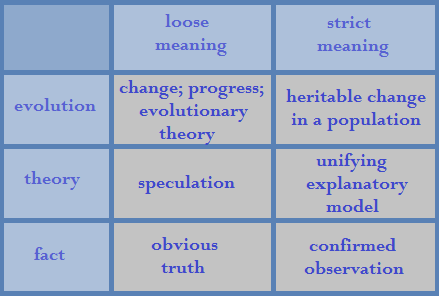


 nothing is mere